


hoosing between dropshipping vs Amazon FBA is one of the first big decisions you'll make as an online seller, and it shapes almost everything that follows. It affects how much cash you need upfront, how much control you keep over your brand, and how risky your first year feels. Both models let you sell physical products online without running a factory, but they work in very different ways. This guide breaks down the seven facts that actually matter so you can pick the right path in 2026. We'll keep it practical, honest about the trade-offs, and focused on what you'll really experience once money is on the line.
What Dropshipping and Amazon FBA Actually Mean
Before we compare anything, let's get the definitions straight. People throw these terms around loosely, and that confusion leads to bad decisions.
Dropshipping is a fulfillment model where you sell products on your own store, usually built on Shopify or WooCommerce, but you never hold inventory. When a customer buys something, your supplier ships it directly to them. You only pay for a product after you've already sold it. If you're brand new to the concept, our guide on what is dropshipping covers the basics in plain language.
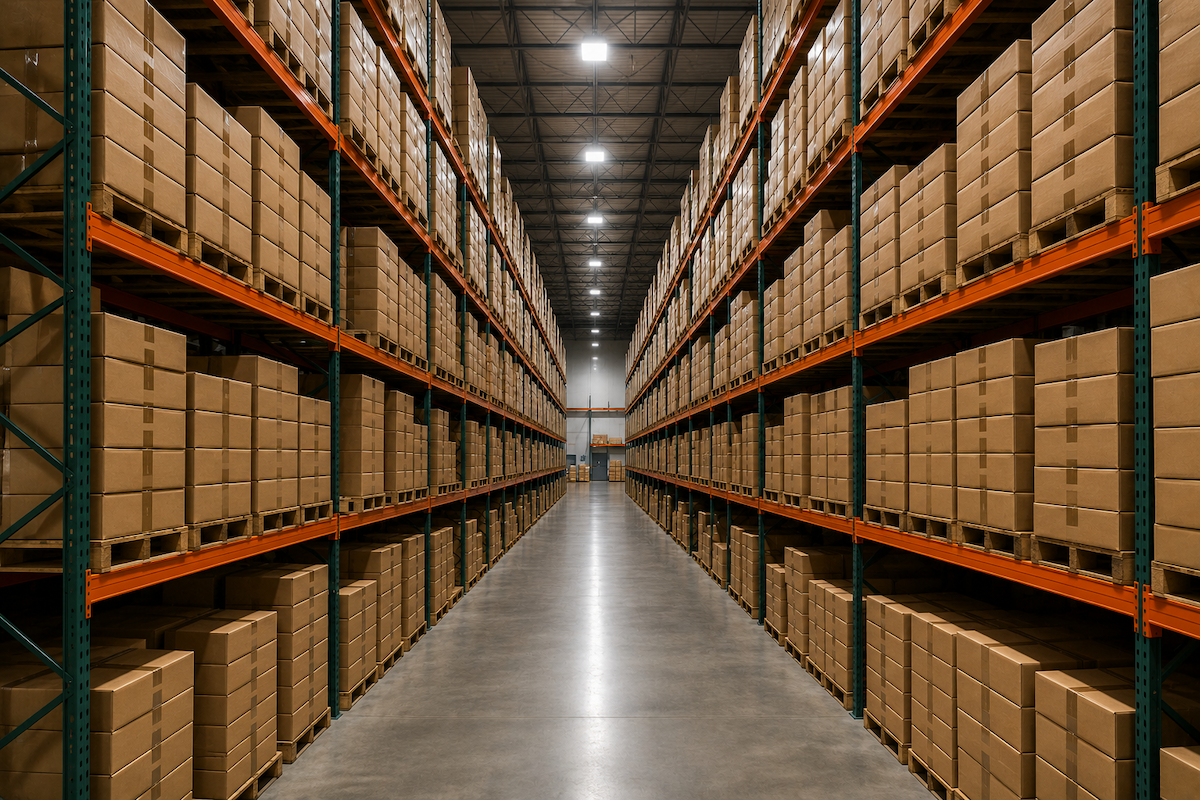
Amazon FBA (Fulfillment by Amazon) is different. You buy inventory in bulk, ship it to Amazon's warehouses, and Amazon stores, packs, and ships every order for you. You're selling on Amazon's marketplace, not your own website. Amazon handles the logistics and a big chunk of customer service, but you pay for that convenience.
The Core Difference in One Sentence
Here's the simplest way to remember it. With dropshipping, you own the store but not the inventory. With Amazon FBA, you own the inventory but rent the storefront. That single distinction drives most of the pros and cons we'll cover below.
Fact 1: Startup Costs Are Wildly Different
Money is usually the first thing new sellers worry about, and for good reason. The gap between these two models is huge.
Dropshipping has the lower barrier to entry by far. Because you don't buy inventory upfront, your main costs are a store subscription, a domain, an app or two, and your marketing budget. Many people launch a working store for a few hundred dollars. You can even start lean and reinvest profits as you go.
Amazon FBA demands real capital before you sell a single unit. You need to purchase inventory in bulk, and most suppliers have minimum order quantities. Add product samples, shipping to Amazon's warehouses, branding, and photography, and you're often looking at a few thousand dollars just to get started. That inventory sits in a warehouse whether it sells or not.
Why This Matters for Beginners
If you're testing an idea or you simply don't have much cash, the low upfront cost of dropshipping lets you learn without betting the farm. You can validate a product with a small ad budget, and if it flops, you're not stuck with 500 units in a warehouse. When you compare dropshipping vs Amazon FBA purely on risk-to-start, dropshipping wins for most first-timers.
Fact 2: Profit Margins Tell a More Complicated Story
Startup cost is only half the money conversation. The other half is what you actually keep.
Dropshipping margins usually land in the 15% to 30% range. You pay a bit more per unit because you're buying one item at a time instead of in bulk, and paid ads can eat into your profit fast. The upside is that you're not carrying inventory risk, so a slow month doesn't leave you with dead stock. Our deep dive on dropshipping profit margins breaks down how to protect them.
Amazon FBA margins can be higher on paper, sometimes 20% to 40%, because bulk buying lowers your per-unit cost. But Amazon's fees are aggressive. You'll pay referral fees on every sale, monthly storage fees, and fulfillment fees per unit, all detailed in Amazon's official FBA fee schedule. Long-term storage fees punish products that don't sell quickly. Those costs add up and can quietly shrink what looked like a healthy margin.
The Hidden Cost Factor
Both models have hidden costs, but they show up in different places. In dropshipping, your biggest variable cost is advertising, since you're driving all your own traffic. In Amazon FBA, your biggest drag is the stack of platform fees plus the capital tied up in inventory that hasn't sold yet. Neither is "cheaper" across the board. It depends on your product, your traffic strategy, and how fast your stock turns over.
Fact 3: Traffic Comes From Opposite Directions
This is one of the most underrated differences in the dropshipping vs Amazon FBA debate, and it changes your entire daily workload.
With Amazon FBA, you're plugging into an audience of hundreds of millions of ready-to-buy shoppers. People already trust Amazon and go there specifically to purchase. If your listing ranks well and your reviews are solid, sales can come in without you touching an ad. The catch is fierce competition and near-zero customer loyalty to you specifically.
With dropshipping, you own the traffic problem entirely. Nobody stumbles onto your brand-new store by accident. You bring visitors through paid ads, SEO, social media, email, or content. That's more work upfront, but it also means you build a real audience and a brand that belongs to you. Our overview of dropshipping marketing strategies is a good starting point if this part feels intimidating.
Which Traffic Model Fits You?
If marketing scares you and you want built-in demand, Amazon FBA's marketplace traffic is a genuine advantage. If you enjoy building an audience and want to control your customer relationships, dropshipping gives you that freedom. Just be realistic. Marketplace traffic feels easier, but you're competing on price and reviews inside someone else's ecosystem.
Fact 4: Branding and Control Separate the Two Models
Control is where dropshipping and Amazon FBA feel completely different, and it matters more than most beginners expect.
On your own dropshipping store, you control everything. The design, the product descriptions, the checkout experience, the follow-up emails, and the overall brand vibe are all yours. You can build a memorable brand that customers remember and return to. That's a real asset, and it's why so many sellers eventually want to own their storefront. If branding is a priority, our guide on how to scale your dropshipping business shows where that control pays off.
On Amazon, you're a tenant. Amazon owns the customer relationship, the layout, and the rules. You can't easily email your buyers, your branding is squeezed into a template, and Amazon can change fees or policies with little warning. Your products can even be delisted if you violate a rule you didn't fully understand. You trade control for convenience and traffic.
The Long-Term Asset Question
Think about where you want to be in three years. A dropshipping brand you own can be sold, scaled, or expanded to new channels. An Amazon FBA business is valuable too, but its value is tied to a platform you don't control. Many experienced sellers run both, using Amazon for volume and a branded store for loyalty and margin.
Fact 5: Shipping Speed Can Make or Break You
Customers in 2026 expect fast delivery, full stop. Research from the Baymard Institute shows that slow or expensive shipping is one of the top reasons shoppers abandon their carts, and a majority now expect delivery within just a few days.
Amazon FBA has traditionally owned this space. Prime members get fast, reliable delivery, and that speed builds trust instantly. This is one of Amazon FBA's strongest selling points, and it's hard to beat on the marketplace itself.
Dropshipping used to struggle here, especially when sellers relied on overseas suppliers with two to three week shipping times. That reputation still haunts the model. But it's outdated if you source smart. Domestic suppliers have closed the gap, offering two to five day delivery from US and Canadian warehouses. If you want to understand why this shift matters, read our breakdown of dropshipping from USA not China.
How DropCommerce Solves the Speed Problem
This is exactly the pain point DropCommerce was built to fix. DropCommerce connects your store exclusively with pre-vetted US and Canadian suppliers, so you get the fast shipping customers expect without warehousing anything yourself.
Here's what makes it work for the dropshipping side of this comparison:
- Two to five day shipping from US and Canadian warehouses
- Pre-vetted suppliers with consistent quality standards
- No minimum order requirements, so you can start lean
- Seamless Shopify and WooCommerce integration
- Real-time inventory syncing to prevent overselling
- A curated catalog across home, beauty, pet, and lifestyle niches
DropCommerce works best for store owners who want to compete on customer experience and brand instead of racing to the bottom on price. It closes the one gap where Amazon FBA used to have an unfair advantage.
Fact 6: Risk and Flexibility Point in Different Directions
Every business has risk. The question is what kind of risk you're comfortable carrying.
Dropshipping keeps your risk low and your flexibility high. Because you don't own inventory, you can test dozens of products without financial commitment. If a product stops selling, you swap it out and move on. You can pivot niches, adjust pricing, and experiment constantly. The main risks are thinner margins and dependence on supplier reliability, which is why choosing vetted suppliers matters so much.
Amazon FBA carries inventory risk that's hard to ignore. If you order 1,000 units and they don't sell, you're stuck with storage fees and tied-up cash. Account suspensions are another real threat, and they can freeze your income overnight. On the flip side, once a product is selling and ranking, FBA can feel more hands-off day to day since Amazon handles fulfillment.
Matching Risk to Your Situation
If you're starting with limited funds or you value the ability to pivot fast, dropshipping's flexibility is a genuine safety net. If you have capital, a validated product, and the patience to manage inventory, Amazon FBA's structure can reward that commitment. There's no universally "safer" choice. There's only the choice that fits your cash, your temperament, and your goals.
Fact 7: The Right Choice Depends on Your Goals, Not Hype
By now it should be clear that the dropshipping vs Amazon FBA question doesn't have a single winner. The honest answer is that it depends on what you're trying to build.
Choose dropshipping if you want low startup costs, full control of your brand, the freedom to test and pivot, and a business asset you fully own. It's the better fit for beginners, for anyone who wants to build a real brand, and for sellers who like owning the customer relationship. With modern domestic suppliers, the old shipping objection no longer holds up.
Choose Amazon FBA if you have upfront capital, want to tap into massive existing traffic, and prefer that Amazon handle storage and fulfillment. It suits sellers who don't want to build their own audience and are comfortable operating inside Amazon's rules and fee structure.
Can You Do Both?
Absolutely, and many successful sellers do. A common approach is to launch a branded dropshipping store to build an audience and brand, then use Amazon FBA to move volume on bestsellers. The two models can feed each other. Just don't spread yourself too thin before you've gotten one channel profitable. If you're still weighing your options, our honest take on is dropshipping worth it can help you decide.
A Side-by-Side Look at the Numbers
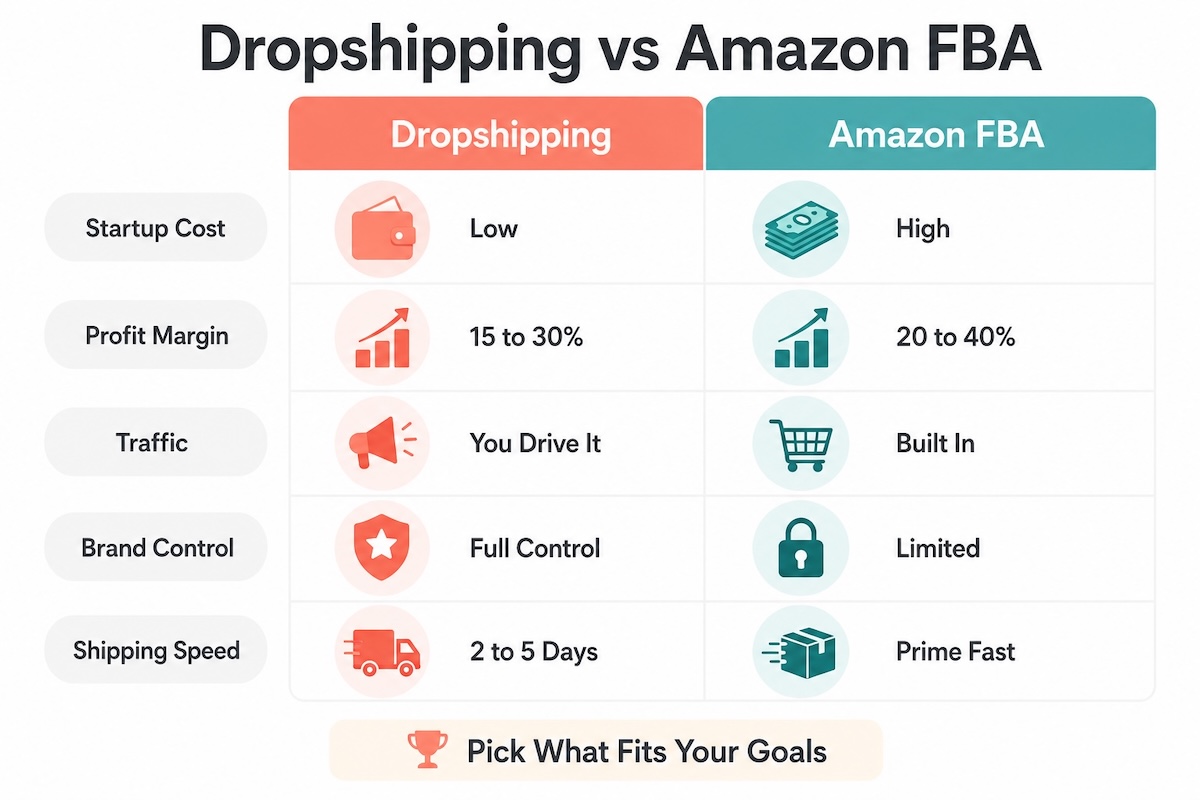
Since our CMS reads better in prose than in tables, here's a clear rundown of how the two models stack up across the factors that matter most. Skim this section like a cheat sheet before you commit.
Startup cost: Dropshipping typically runs a few hundred dollars to launch. Amazon FBA usually starts in the low thousands because you buy inventory upfront.
Typical profit margin: Dropshipping lands around 15% to 30%. Amazon FBA can reach 20% to 40% on paper, though fees often narrow that gap in practice.
Inventory risk: Dropshipping carries almost none since you buy after you sell. Amazon FBA carries real risk because unsold stock costs you storage and ties up cash.
Traffic source: Dropshipping requires you to drive your own visitors through ads, SEO, and social. Amazon FBA taps into Amazon's existing marketplace shoppers.
Brand control: Dropshipping gives you full ownership of the storefront and customer relationship. Amazon FBA limits you to Amazon's template and rules.
Shipping speed: Amazon FBA offers fast Prime delivery. Dropshipping matches it when you use domestic suppliers with two to five day shipping.
Best for: Dropshipping suits beginners and brand builders. Amazon FBA suits funded sellers with a validated product.
Reading the Comparison Honestly
Notice that neither column is all green checkmarks. Dropshipping vs Amazon FBA is a set of trade-offs, not a scoreboard where one side sweeps. The seller who wins is the one who matches these factors to their own budget, skills, and patience rather than chasing whichever model looks trendiest this month.
Common Questions About Dropshipping vs Amazon FBA
New sellers tend to ask the same handful of questions when they reach this decision. Here are quick, honest answers.
Is dropshipping cheaper to start than Amazon FBA?
Yes, in almost every case. Dropshipping lets you skip the bulk inventory purchase that Amazon FBA requires, so your upfront cost is dramatically lower. That's the single biggest reason beginners lean toward dropshipping first. You can test a product with a small budget and scale only what works.
Which model is more profitable long term?
It depends on execution. Amazon FBA can post higher per-unit margins thanks to bulk pricing, but its fees and inventory costs eat into that. Dropshipping keeps margins slimmer but far more flexible, and a strong brand can command higher prices over time. Profit comes down to your product, your traffic, and how well you control costs in either model.
Does Amazon FBA still have a shipping advantage?
Less than it used to. Amazon FBA delivers fast through Prime, which is a real perk. But domestic dropshipping suppliers now offer two to five day shipping from US and Canadian warehouses, so the speed gap has mostly closed. Sourcing locally is the key to matching Amazon on delivery expectations.
Can beginners realistically succeed with either one?
Yes, but the learning curves differ. Dropshipping asks you to learn marketing and brand building. Amazon FBA asks you to learn inventory management, listing optimization, and Amazon's rules. Both are learnable. Pick the one whose challenges you're more excited to tackle, since motivation carries you through the slow early weeks.
Dropshipping vs Amazon FBA: The Bottom Line
Here's the takeaway. Both dropshipping and Amazon FBA are legitimate, proven ways to build an online business in 2026, and neither is a scam or a dead end. Dropshipping wins on low startup cost, control, branding, and flexibility, making it ideal for beginners and brand builders. Amazon FBA wins on built-in traffic and hands-off fulfillment, making it a strong choice for well-funded sellers with validated products.
The biggest myth in this whole debate is that dropshipping means slow shipping. That was true five years ago, but domestic supplier platforms like DropCommerce have erased that gap with two to five day US and Canadian delivery. If fast shipping and a brand you actually own both matter to you, dropshipping done right gives you the best of both worlds. Whichever model you pick, choose it because it fits your goals, not because someone online told you one was dead.

.jpg)


