


ou've figured out the basics. Your dropshipping store is generating sales, your first customers are happy, and you're making money. But $1,000 a month in profit feels like a plateau, and you're wondering: what's actually required to hit $10,000?
The truth is that scaling a dropshipping business isn't about luck or finding some secret hack. It's about systematically improving the parts of your operation that actually move the needle. The businesses that successfully scale from four figures to five figures do so because they focus on a few core areas: product selection, conversion optimization, customer retention, and operational efficiency.
In this guide, we'll walk through exactly how to scale your dropshipping business with strategies that work in the real world, not just in theory.
Understand Where Your Profits Actually Come From

Before you start scaling, you need to know which products and customer segments are driving your real profit. This sounds obvious, but most dropshippers don't actually track this properly.
Many store owners look at gross revenue and assume all sales are created equal. They're not. A $100 order might cost you $60 in product costs, $15 in ads, and $10 in platform fees, leaving you with $15 in profit. Another $100 order might cost $50 in product, $5 in ads, and $10 in fees, leaving you $35 in profit.
Start by auditing your last 30 days of sales data. Break it down by:
- Product category or individual product
- Traffic source (paid ads, organic, email, etc.)
- Customer acquisition cost (CAC)
- Average order value (AOV)
- Repeat purchase rate
Which products have the highest profit margin after all costs? Which traffic sources bring customers who actually spend money? Which customer segments buy again?
Once you identify your winners, you can make smarter decisions about where to invest time and money. You'll likely find that 20% of your products generate 80% of your profit. Focus on those first.
Optimize for Conversion Before You Scale Traffic
Here's a mistake we see constantly: store owners try to scale by buying more ads before they've optimized their conversion rate. This is like trying to fill a bucket with a hole in the bottom.
If your store converts at 1%, increasing ad spend just means more wasted money on unqualified visitors. But if you improve conversion to 1.5% or 2%, that same ad budget suddenly becomes much more profitable.
Start with the obvious wins:
Product pages should clearly explain what you're selling and why someone should buy it. Use real product photos (or high-quality images from your supplier), write benefit-focused descriptions, and include customer reviews or social proof if you have them. Remove any friction. Make sure shipping times and costs are crystal clear upfront.
Checkout process should be as short as possible. Every additional field you ask for increases cart abandonment. Only ask for information you absolutely need.
Site speed matters more than most people think. A slow store loses customers. Test your site speed and fix any obvious issues. If your platform is slow, that's a sign you might need to look at alternatives.
Trust signals help. An "About Us" page, clear return policy, and customer service contact information reduce purchase anxiety. If you're using a quality supplier like those available through DropCommerce, mention that you source from trusted North American suppliers. This builds confidence that customers will actually receive what they ordered.
For a deeper dive into conversion optimization specifically for dropshipping, check out our guide on dropshipping conversion rate optimization.
Even small improvements here compound. A 0.5% conversion bump on 1,000 monthly visitors means 5 additional sales. If those sales average $50 profit each, that's $250 extra monthly profit with zero additional ad spend.
Double Down on Your Best Traffic Source

Most dropshippers start by testing multiple traffic channels. That's fine for learning, but scaling requires focus.
Identify which channel—Facebook ads, Google Shopping, TikTok, Pinterest, email, or organic—brings you the most profitable customers. Then systematically improve and scale that channel before spreading resources thin across others.
If Facebook ads are your winner, test new audience segments, ad creatives, and bidding strategies. Scale gradually (don't double your budget overnight) and monitor your return on ad spend (ROAS) carefully. When ROAS stays healthy as you increase spend, you've found a scalable channel.
If email is working well, focus on growing your email list faster and creating more sequences that drive repeat purchases. Email marketing for dropshipping is one of the most underrated scaling levers available.
If you're getting organic traffic, double down on content that's already ranking and expand into related keywords. The work you've done to rank organically has lasting value. It compounds over time in a way paid traffic never can.
The principle here is simple: become excellent at one channel before trying to master five.
Build a Repeat Customer Engine
Many dropshippers focus entirely on acquiring new customers and ignore the goldmine right in front of them: the customers who've already bought.
Repeat customers cost less to acquire than new ones, they spend more per order, and they have higher lifetime value. Yet most dropshippers have no systematic strategy to get people to buy twice.
Start by segmenting your customers:
- Who's bought once?
- Who's bought multiple times?
- Who bought months ago and has gone silent?
Then create specific strategies for each group. For one-time buyers, an email sequence 7-10 days after purchase might introduce complementary products. For repeat customers, exclusive offers or early access to new products make them feel valued. For dormant customers, a "we miss you" campaign with a special discount can reactivate them.
The specifics depend on your product category, but the principle is consistent: treat your existing customer base as a separate business channel alongside your paid ads. Dropshipping email marketing campaigns can be surprisingly effective when done with intent.
Many stores see repeat purchase rates jump from 5% to 15% or higher just by implementing a basic email retention strategy. If you're currently at $1,000/month and half of your customers buy again, that alone could double your revenue.
Expand Your Product Selection Strategically

As you scale, limiting yourself to a single product becomes a bottleneck. But adding products randomly is also a mistake. Most new products will flop and waste your marketing budget.
Instead, add products strategically. Look for products that:
- Appeal to your existing customer base (same audience, different need)
- Have healthy profit margins after all costs
- Have proven demand (search volume, trending signals, or existing competition)
- Don't cannibalize your best sellers
For example, if you're selling phone cases, expanding into screen protectors or phone chargers makes sense. Both products appeal to the same audience, have similar profit margins, and complement rather than compete with your core product.
Test new products with a small ad budget first, maybe $100-200 to see if there's genuine demand. Don't go all-in on products until you've proven they convert. The goal is to build a curated catalog, not a warehouse.
This approach also helps you hedge risk. If you rely on a single product and that market gets saturated or Facebook changes its algorithm, you're in trouble. Multiple proven products create stability and multiple revenue streams.
Leverage AI and Automation to Buy Back Your Time
As you grow, you'll hit a wall where you're working 60+ hours a week managing everything yourself. At that point, growth stalls because you've become the bottleneck.
Start automating early, before you're drowning. This doesn't necessarily mean hiring people. It means using tools.
Use email automation to nurture leads and customers without manual work. Set up SMS reminders for abandoned carts. Use AI for copywriting and content creation to speed up your marketing output. Automate your product feed updates so inventory stays accurate across platforms.
Tools like Zapier can connect your store to your email platform, CRM, or spreadsheets, eliminating manual data entry. Even small automations save hours every month, and those hours are what you'll need to focus on strategic work that actually scales the business.
The goal isn't to eliminate all your work. It's to eliminate the work that doesn't move the needle, freeing you to focus on product selection, marketing strategy, and customer retention.
Optimize Your Store's Fundamentals
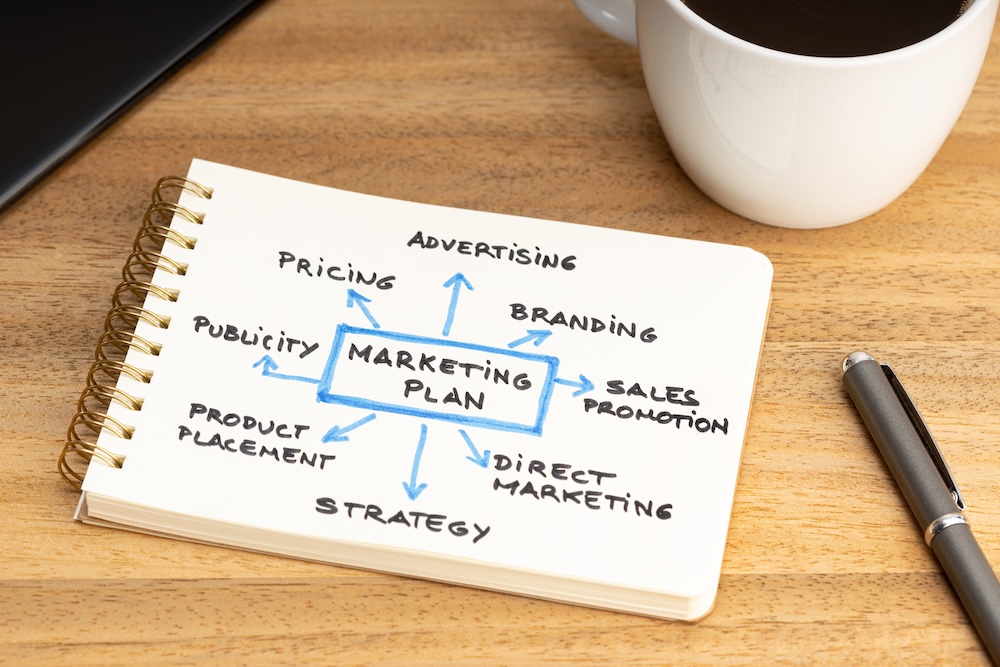
Before you scale traffic, make sure your store itself is built on solid ground.
Your platform matters. Shopify is the most popular, but BigCommerce, WooCommerce, and others work fine too. The important thing is that your store loads quickly, looks professional, and doesn't have technical issues that confuse or frustrate customers. If you're still using a free platform or a drag-and-drop builder that feels clunky, it's worth evaluating an upgrade.
Your domain should be professional, something people can remember and trust. Something like "yourbrand.com" instead of "yourbrand.shopify.com."
Your branding should be consistent across your store, ads, and email. You don't need fancy graphics, but you do need to look intentional. Customers are more confident buying from a store that looks like a real business.
And your landing pages should be conversion-focused. Generic store homepages don't convert well. If you're running paid ads, send traffic to a landing page built around that specific product or offer, not your store's homepage. Landing page builders can make this easier if you're not comfortable with design.
These fundamentals don't seem flashy, but they directly impact your conversion rate and therefore your ability to scale profitably.
Focus on Sourcing Reliability
One of the biggest frustrations for dropshipping customers is ordering a product and then waiting weeks for it to arrive. This directly impacts repeat purchases, reviews, and customer lifetime value.
When you're scaling, sourcing becomes critical. Work with suppliers who reliably ship fast and maintain quality standards. North American suppliers typically offer faster shipping than overseas alternatives, which means happier customers and fewer support tickets.
DropCommerce connects you with pre-vetted suppliers who prioritize reliability and quality. When you're sourcing through a trusted marketplace rather than reaching out to random suppliers, you reduce the risk of quality issues or shipping delays that tank your reputation.
Measure and Iterate

Scaling isn't a straight path. Some strategies will work better than others. The key is measuring what's actually happening and adjusting based on data.
Track these metrics religiously:
- Revenue and profit (not just revenue)
- Customer acquisition cost by channel
- Conversion rate
- Average order value
- Repeat purchase rate
- Customer lifetime value
Review these numbers weekly. Where are you losing money? Where are you making it? What changed this week compared to last week?
Small improvements in multiple areas compound. A 10% improvement in conversion rate plus a 20% improvement in repeat purchases plus a 15% increase in average order value doesn't add up to 45% growth. It multiplies to much more.
Scaling From $1k to $10k Is About Consistency, Not Magic
The stores that successfully scale from $1,000 to $10,000 monthly profit don't do anything revolutionary. They optimize their conversion rate. They focus their marketing on proven channels. They build repeat customers through email and retention strategies. They expand products thoughtfully. They automate what they can and focus their own time on strategy.
It's unsexy. It's not about finding some hidden product or viral ad. It's about executing the fundamentals better than you were executing them before.
Start with the area where you're losing the most money. Usually, it's either a low conversion rate or a high customer acquisition cost. Fix that. Then move to the next bottleneck. Repeat.
If you're ready to scale and need a partner who provides reliable sourcing and fast shipping, DropCommerce is built to help dropshippers at your stage. Our North American supplier network and integration with Shopify and BigCommerce removes friction so you can focus on the marketing and strategy that actually scales your business.
The path to $10k/month exists. You're already on it. Now it's just about walking it intentionally.

.jpg)


