


croll through any business forum and you will see the same worried question over and over. Is dropshipping oversaturated, and did you miss your chance? It is a fair thing to wonder. Everyone seems to be starting a store, YouTube is full of gurus, and the "easy money" days feel long gone. But the honest answer is more encouraging and more nuanced than the doom-and-gloom takes suggest. In this guide, we will look at what the data actually says, bust the biggest myths, and walk through seven proven truths about competing in 2026. By the end, you will know exactly where the real opportunity is and how to claim it.
Is Dropshipping Oversaturated? The Honest Answer
Let us get straight to it. No, dropshipping is not oversaturated in the way people fear. What is saturated is the lazy version of it, the generic stores selling the same cheap gadgets with the same stolen ad videos. That corner of the market is brutal.
The broader market, however, is still growing fast. The global dropshipping market sits around $343 billion in 2026 and is projected to reach $1.84 trillion by 2035, growing at roughly 20.6% per year. A shrinking, oversaturated industry does not post numbers like that.
So when someone asks "is dropshipping oversaturated," the accurate answer is this. The easy, low-effort path is crowded. The path built on quality, speed, and branding has more room than ever. The opportunity did not disappear. It just moved.
Why People Think It Is Oversaturated
The saturation fear comes from a real place. If you look only at the most common niches and the cheapest products, competition is genuinely fierce. Thousands of stores sell the exact same items, so it feels impossible to stand out.
Social media amplifies this feeling. Every ad you see seems to be a dropshipping store, and every guru claims the market is either dead or a goldmine. The noise makes it hard to see the actual landscape.
But feeling crowded and being oversaturated are different things. A market is only truly saturated when demand is fully met and there is no room for better options. That is nowhere close to reality in ecommerce, where customer expectations keep rising and most stores fail to meet them.
Truth 1: The Market Is Bigger Than Ever

The first truth undercuts the whole saturation myth. Ecommerce is still expanding, and dropshipping is expanding with it. More people shop online every year, across more categories, in more countries.
This growth means new demand is constantly being created. A bigger pie means there is room for new players, even as more sellers enter. You are not fighting over a fixed number of customers. The customer base itself keeps growing.
If you are still weighing whether the model makes sense at all, our guide on whether dropshipping is worth it breaks down the honest pros and cons. The short version is that opportunity remains strong for sellers who take it seriously.
Truth 2: Most Competitors Are Low Effort
Here is the truth that should give you real confidence. The majority of your "competition" is not serious. Most dropshipping stores are launched on a whim, run for a few weeks, and abandoned when quick riches do not appear.
These stores share the same weaknesses. Generic branding, slow overseas shipping, copied product descriptions, and no customer service. They flood the market with volume but almost none of them build anything lasting.
That means the bar to stand out is lower than the crowd suggests. When you do even a few things well, like fast shipping and genuine branding, you instantly rise above the noise. The question is not "is dropshipping oversaturated" but "am I willing to do what most sellers will not."
The 90% Who Quit
Industry estimates suggest only 10% to 20% of dropshippers reach sustained profitability. That sounds discouraging until you flip it around. Most of your competition removes itself from the race within months.
The sellers who fail usually do so for predictable reasons. They pick bad products, ship slowly, market poorly, or give up too early. Understanding these failure points is a roadmap of what to avoid. Our guide on common dropshipping mistakes covers the biggest ones in detail.
Persistence alone puts you ahead of most people who try this. Add real strategy on top, and the crowded market starts looking a lot more open.
Truth 3: Differentiation Beats Saturation
The word "oversaturated" assumes every store is interchangeable. But the moment you differentiate, saturation stops mattering. You are no longer one of a thousand identical shops. You are the one option that stands out.
Differentiation can come from many angles. A tight niche, a strong brand voice, faster shipping, better product photography, or superior customer service. Any of these separates you from the copy-paste crowd.
The key insight is that customers are not looking for the most common store. They are looking for the best fit. When you position yourself clearly, the size of the overall market becomes irrelevant. You only need your slice, served better than anyone else.
Niche Down to Stand Out
The fastest way to escape saturation is to narrow your focus. A general store competes with everyone. A store built around a specific customer and need competes with almost no one.
Instead of a broad "home goods" store, imagine a shop dedicated to sustainable kitchen products or gear for small-space apartment living. The audience is smaller, but your relevance is far higher, and relevance is what converts.
For help finding an opening, our guide to dropshipping niches with low competition is a great place to start. Picking the right lane is half the battle in a crowded field.
Truth 4: Fast Shipping Is a Massive Edge

Here is where saturation fears collapse entirely. The single biggest complaint about dropshipping, slow overseas shipping, is also your biggest opportunity. Most competitors still ship from across the world, taking two to three weeks.
Customers hate this. Around 61% expect delivery in three days or fewer, and nearly half abandon carts over slow shipping. The stores that solve this problem instantly win trust that the slow-shipping crowd cannot touch.
This is why domestic sourcing is such a powerful advantage. When you ship from US or Canadian warehouses in two to five days, you are simply playing a different game than the saturated bargain-bin sellers. Speed is a moat, and most sellers refuse to build it.
Truth 5: Quality Suppliers Change Everything
Product quality is another area where the average store fails, which means it is another area where you can win. Cheap suppliers ship inconsistent, disappointing products that generate refunds and bad reviews.
When you partner with vetted, reliable suppliers, your customer experience jumps ahead of most competitors automatically. Consistent quality builds the trust that turns one-time buyers into repeat customers.
This is exactly where a platform like DropCommerce fits. It connects your store exclusively with pre-vetted US and Canadian suppliers, offering two to five day shipping, no minimum orders, and real-time inventory syncing. For sellers who want to compete on experience rather than price, that foundation makes standing out far easier.
Why Domestic Sourcing Wins
Domestic suppliers solve two saturation problems at once. They deliver faster and they tend to offer more reliable quality with clearer communication. Both are things the crowded, cheap end of the market cannot match.
Sourcing locally also protects your business behind the scenes. Fewer shipping disputes mean healthier payment processing and safer ad accounts. According to Shopify, reliable fulfillment and supplier relationships are central to long-term dropshipping success.
In a market people call oversaturated, this reliability is what separates a real brand from a disposable store. Quality and speed are the differentiators most sellers are too impatient to build.
Truth 6: Branding Turns Stores Into Businesses
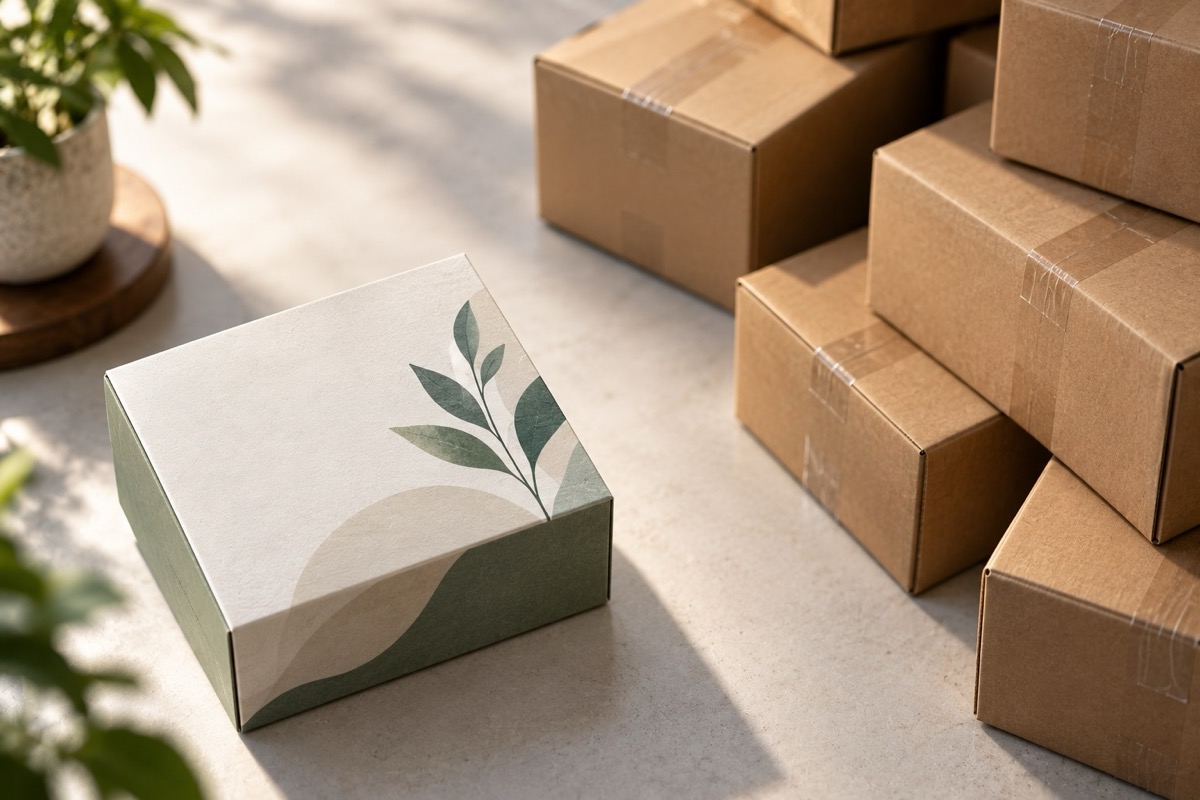
A store is easy to copy. A brand is not. This is the difference between the sellers who complain about saturation and the ones who quietly thrive in it.
Branding is the personality, trust, and emotional connection customers feel with you. It is your story, your voice, your look, and the promise you keep. When customers believe in your brand, price and competition matter far less.
Generic stores blur together and get ignored. Branded stores get remembered, recommended, and revisited. In a crowded market, being memorable is the whole game, and branding is how you achieve it.
Build Trust to Beat the Crowd
Trust is the currency that saturation cannot devalue. Real reviews, transparent policies, professional design, and responsive support all signal that you are a legitimate business, not a fly-by-night store.
These signals are exactly what nervous shoppers look for when deciding between you and a competitor. In a market full of sketchy stores, looking and acting trustworthy is a powerful advantage.
Investing in customer experience also compounds over time. Happy customers return and refer others, which lowers your reliance on paid ads. That stability is what turns a crowded-market side hustle into a durable business.
Truth 7: The Winners Play the Long Game
The final truth ties everything together. Dropshipping is not oversaturated for people who treat it like a real business. It is only crowded for those chasing a quick, effortless win.
The sellers who succeed think in years, not weeks. They test products patiently, build a brand steadily, and improve their operations continuously. That mindset alone puts them in rare company.
So the real question behind "is dropshipping oversaturated" is about you, not the market. Are you willing to do the work most people skip? If so, the crowd is not your obstacle. It is your opportunity, because you will be the option that actually delivers.
What Long-Term Sellers Do Differently
Long-term winners focus on things that compound. They prioritize repeat customers over one-time sales, since retention is far cheaper than constant acquisition. They reinvest profits into better products, faster shipping, and stronger marketing.
They also stay adaptable. Trends shift, platforms change, and winning products come and go. The sellers who last treat their store as a living business, adjusting as the market moves rather than giving up when one tactic stops working.
If you want to scale sustainably, our guide on how to scale your dropshipping business lays out the steps. Growth is very much still possible for those who build on a solid foundation.
Where the Real Opportunities Are in 2026

If the generic niches are crowded, where should you actually look? The good news is that new gaps open constantly as trends, technology, and consumer values shift. The market is not full. It is just uneven.
Emerging categories tend to have far less competition because most sellers stick to what worked years ago. Sustainability, wellness, adaptive and accessibility products, and specialized hobby niches are all growing faster than the sellers serving them. That gap is your opening. Anyone still asking is dropshipping oversaturated has usually only looked at the crowded categories, not these rising ones.
Regional focus is another underused angle. Serving a specific country or region with fast local shipping instantly narrows your competition. A store built specifically for North American buyers with two to five day delivery competes against far fewer sellers than a generic global shop.
Follow Demand, Not Hype
The mistake many sellers make is chasing whatever product a guru hyped last week. By the time a product is everywhere in your feed, it is already crowded. Real opportunity lives slightly ahead of the crowd.
Use tools like Google Trends and social platforms to spot rising interest early. Look for products solving genuine problems for a specific group of people. Steady, real demand beats viral flashes that saturate overnight and vanish just as fast.
You also do not need to invent something no one has sold. You just need to serve an existing demand better than the current options. Faster shipping, cleaner branding, and better service on a proven product often beat a risky, unproven one.
How to Validate Your Idea in a Crowded Market
Before you pour money into a store, test whether your angle actually holds up. Validation protects you from building in a truly saturated corner and points you toward the gaps worth pursuing.
Start by studying the existing competition for your product. If every seller looks identical and ships slowly, that is not saturation. That is opportunity, because you can clearly do better. If a few sellers already offer fast shipping, strong branding, and great reviews, the bar is higher and you will need a sharper angle.
Then test small before going all in. List a handful of products, run a modest ad budget or post organic content, and watch how people respond. Real customer behavior tells you far more than any forum debate about whether the market is too crowded.
Read the Competition as a Map
Competitor research is not about fear. It is about finding gaps. When you study other stores, look for what they are missing rather than what they are doing well.
Slow shipping, weak product photos, thin descriptions, no reviews, and poor customer service are all openings. Every weakness in a competitor is a place where you can win the customer. In a market people call oversaturated, these gaps are surprisingly common.
The stores that dominate crowded niches are usually the ones that simply executed better on the basics. You rarely need a revolutionary idea. You need reliable execution where others cut corners. That is the real reason the question is dropshipping oversaturated has a hopeful answer for anyone willing to do the work.
Common Myths About Dropshipping Saturation
A few stubborn myths keep the saturation panic alive. Clearing them up makes the real picture much easier to see. Here are the ones worth ignoring.
The biggest myth is that all niches are equally crowded. In reality, competition varies enormously. While generic gadget stores are packed, plenty of specific niches remain wide open for sellers willing to look.
Watch out for these misleading beliefs:
- The myth that you need a brand-new product no one has ever sold
- The myth that low prices are the only way to compete
- The myth that every profitable niche is already taken
- The myth that ads are the only way to get customers
- The myth that it is "too late" to start
Each of these keeps capable people on the sidelines. None of them holds up against how the market actually works in 2026.
Frequently Asked Questions
New and returning sellers ask the same core questions about competition. Here are direct answers to the most common ones.
Is It Too Late to Start Dropshipping in 2026?
No. With the market growing toward $1.84 trillion by 2035, there is plenty of runway. What matters is your approach, not your timing. Sellers who focus on quality, speed, and branding are still launching profitable stores every day.
The "too late" feeling comes from comparing yourself to the crowded, low-effort segment. Step into the quality lane and the timing concern mostly disappears. There is far more room there.
How Do I Compete in a Crowded Market?
Differentiate hard. Pick a specific niche, ship fast with domestic suppliers, invest in real branding, and deliver great customer service. Doing a few of these well instantly separates you from the copy-paste majority.
Do not try to out-cheap the bargain sellers. Compete on trust and experience instead, which are things most competitors cannot or will not match.
Is Dropshipping Still Profitable?
Yes, for sellers who run it like a business. Typical margins land in the 15% to 30% range, and focused stores with strong branding often do better. Profitability comes from smart sourcing, good pricing, and customer retention, not from luck.
The stores that struggle usually cut corners on quality and speed. Avoid those traps and profitability is very achievable, even in a market people call saturated.
Key Takeaways: Is Dropshipping Oversaturated?
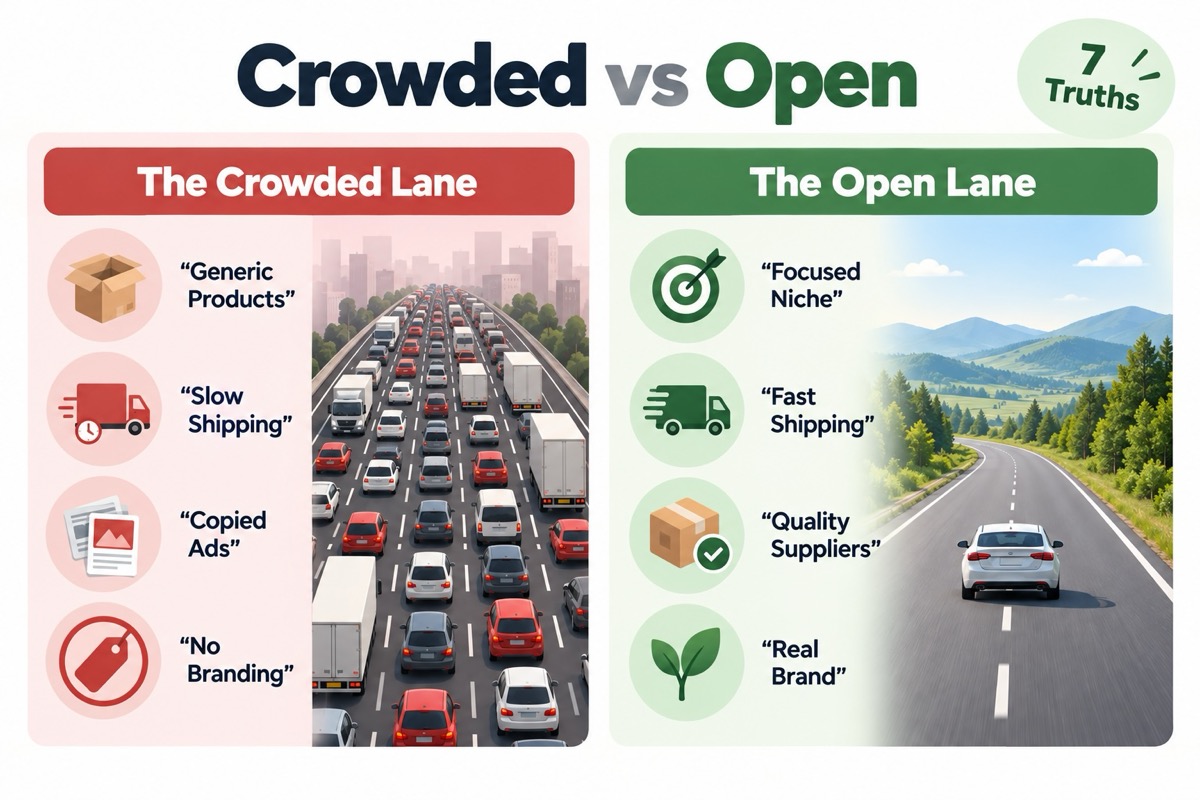
So, is dropshipping oversaturated? Not for anyone willing to do it properly. The market is bigger than ever and still growing fast. What is crowded is the lazy, generic version that most sellers abandon within months.
The seven truths all point the same direction. Differentiation beats saturation. Fast domestic shipping is a moat. Quality suppliers and real branding turn interchangeable stores into memorable businesses. And the winners play a patient, long-term game that most people are unwilling to commit to.
Stop asking whether the market is too crowded and start asking whether you will build the kind of store that stands out. Pick a focused niche, source from reliable suppliers, ship fast, and brand with intention. Do that, and the crowd stops being your competition. It becomes the backdrop that makes your quality shine. The opportunity is still wide open. It is just reserved for the sellers who take it seriously.

.jpg)


