


f you have ever refreshed your order dashboard wondering why a customer is asking "where is my package" for the third time, you already know the problem. Slow delivery is the quiet killer of dropshipping stores. Learning how to reduce dropshipping shipping times is not a nice-to-have anymore. It is the difference between a store that keeps customers and one that burns through ad spend chasing one-time buyers. In this guide, we will walk through nine practical ways to cut your delivery windows from weeks down to days, why speed matters more than ever in 2026, and how to build a fulfillment setup that actually keeps people happy.
Why Dropshipping Shipping Times Matter So Much
Shipping speed is not a small operational detail. It shapes how customers feel about your entire brand. When someone buys from you, the clock starts ticking in their head. Every day past their mental deadline chips away at their trust.
The data backs this up. Around 61% of customers now expect delivery in three days or fewer, and roughly 48% of online buyers abandon their carts when shipping feels too slow. That means slow delivery costs you money before the sale even happens, not just after.
For dropshippers, this is especially brutal. If your supplier ships from overseas, a 20-day transit time is common. By the time the package arrives, your customer has already forgotten what they ordered, opened a dispute, or left a one-star review. Speed protects your reputation and your margins at the same time.
The Hidden Costs of Slow Delivery
Slow shipping does more damage than most new store owners realize. It is not just about impatient customers. It is a chain reaction that hits every part of your business.
First, you get more "where is my order" tickets, which eats your time and your support budget. Second, you get more refund requests and chargebacks, which cut straight into profit. Third, you get fewer repeat purchases, because nobody wants to wait a month twice.
Payment processors also watch your dispute rate closely. Too many slow-shipping complaints can flag your account or freeze your funds. So the question of how to reduce dropshipping shipping times is really a question about survival.
How to Reduce Dropshipping Shipping Times: The Core Strategy
Before we get into tactics, understand the big idea. Fast shipping comes from shortening the physical distance and the number of steps between your supplier and your customer. Everything below serves that one goal.
The single biggest lever is where your products actually ship from. A supplier in the same country as your buyer will always beat one on the other side of the world. That is why domestic sourcing sits at the top of this list.
Let us break down the nine strategies that make the biggest difference.
1. Switch to Domestic Suppliers
.jpg)
This is the fastest, most reliable way to cut delivery times. When your supplier ships from a US or Canadian warehouse to a US or Canadian customer, you go from 15 to 30 days down to 2 to 5 days. No customs delays, no month-long ocean freight, no guessing.
Domestic sourcing also improves quality control and communication. You can reach a North American supplier during your business hours, and returns get handled without shipping products across the planet.
This is exactly where DropCommerce fits in. It connects your store exclusively with pre-vetted US and Canadian suppliers offering two to five day shipping, no minimum orders, and real-time inventory syncing. If speed is your priority, this is the foundation to build on.
2. Vet Your Suppliers for Processing Speed

Transit time is only half the equation. The other half is processing time, which is how long a supplier takes to actually pack and hand off your order after it is placed.
A supplier can advertise "3-day shipping" but sit on your order for four days before it moves. Always ask two questions before you commit. What is your average processing time, and do you ship same-day or next-day on weekdays?
The best suppliers process orders within 24 to 48 hours. If a supplier cannot give you a straight answer on processing speed, treat that as a warning sign and keep looking.
3. Set Up Real-Time Inventory Syncing
Nothing wrecks shipping times like selling a product that is out of stock. The order sits in limbo while your supplier waits for restock, and your customer waits with them.
Real-time inventory syncing solves this. When your supplier runs low, your store updates automatically so you never sell what cannot ship. This keeps every order moving the moment it comes in.
Most quality supplier platforms include this feature. If you are still updating stock counts by hand, you are almost guaranteed to hit delays. Automate it and remove the risk entirely.
Speed Up Your Own Fulfillment Process
Not every delay comes from your supplier. Some come from your own workflow. If you are manually copying orders, forgetting to forward them, or checking your dashboard once a day, you are adding hours or days for no reason.
Tightening your internal process is free and fast to fix. These next strategies focus on your side of the operation.
4. Automate Order Forwarding
Manual order handling is a hidden bottleneck. Every hour an order sits in your inbox before you forward it to your supplier is an hour added to delivery.
Automation tools push orders to your supplier the instant a customer checks out. No copy-paste, no delay, no human error. This alone can shave a full day off your average fulfillment window. If you want a broader view of streamlining operations, our guide on how to automate your dropshipping business covers the full toolkit.
Set up automatic order routing so the workflow runs even while you sleep. Speed loves systems, not manual effort.
5. Offer Faster Shipping Options at Checkout
Sometimes customers will happily pay for speed. Offering a paid expedited option lets impatient buyers upgrade themselves, and it signals that fast delivery is available.
Even if most customers pick standard shipping, having the fast option builds trust. It tells people you take delivery seriously. Just make sure your supplier can actually fulfill the faster tier before you advertise it.
Test your pricing here. Many stores find that a small expedited fee more than covers the cost while boosting perceived reliability.
6. Consolidate Suppliers by Region
If you sell products from five different suppliers scattered across the globe, a single order with multiple items can arrive in separate packages days apart. That confuses customers and multiplies complaints.
Where possible, consolidate around suppliers in the same region as your main customer base. Fewer shipping origins means more predictable, faster delivery and cleaner tracking.
For North American stores, this means leaning heavily on domestic suppliers. It simplifies fulfillment and makes your delivery promises far easier to keep.
Manage Customer Expectations While You Optimize
Cutting shipping times takes some setup. In the meantime, and even after, clear communication keeps customers calm and reduces disputes. Fast shipping wins, but honest shipping keeps the peace.
Never hide your delivery windows or overpromise to close a sale. That backfires every time. Instead, use these communication tactics to protect the customer experience.
7. Display Accurate Delivery Estimates
Show realistic shipping windows right on your product pages and at checkout. If delivery takes 2 to 5 days, say so clearly. Customers who know what to expect rarely complain.
The mistake is staying vague or promising "fast shipping" without a number. Specific estimates build trust and prevent the anxious "where is my order" messages that flood slow stores.
Update these estimates whenever your supplier situation changes. Accuracy here directly lowers your support load and refund rate.
8. Send Proactive Tracking Updates
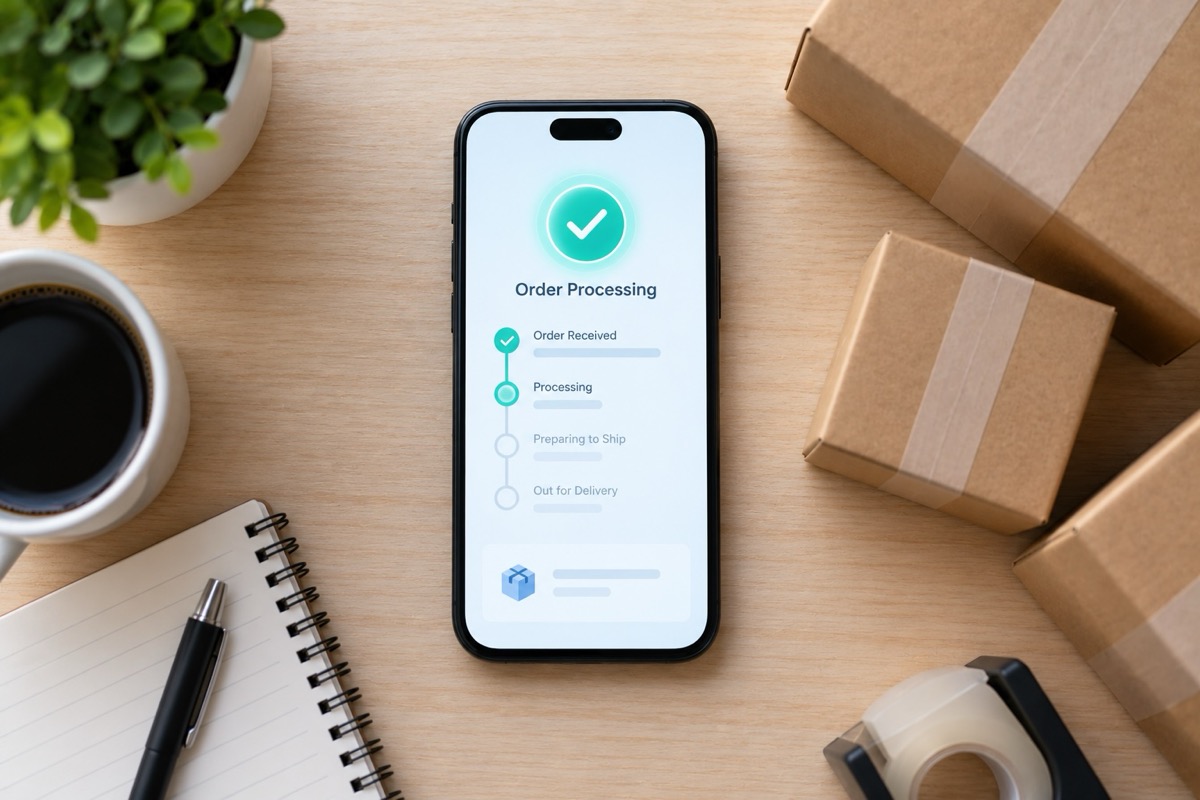
Silence makes waiting feel longer. Automated tracking emails at each stage, such as order confirmed, shipped, and out for delivery, keep customers reassured without them having to ask.
According to Shopify, transparent shipping communication is one of the strongest drivers of repeat purchases. People remember a smooth, informed experience even more than a fast one.
Set up an order tracking workflow that fires automatically. It costs nothing and dramatically cuts the number of nervous customer messages you receive.
9. Write a Clear Shipping Policy Page
A dedicated shipping policy page answers the questions customers would otherwise email you about. Cover processing time, delivery windows by region, carriers used, and what happens if a package is delayed.
This page also protects you during disputes. When your terms are visible and clear, payment processors and customers alike see that you operated in good faith. Pair it with a solid returns approach, and you cover most friction points at once.
Link to it from your footer and checkout so it is always one click away. Clarity here prevents problems before they start.
Turning Fast Shipping Into a Competitive Advantage

Once your shipping times are genuinely fast, use it as a selling point. Most dropshipping competitors still ship slowly, so speed becomes a real differentiator you can market.
Put your delivery promise front and center. Banners like "Ships in 2 to 5 days from US warehouses" on your homepage and product pages convert browsers into buyers. Speed is not just an operations metric. It is marketing.
This ties directly into better conversion rate optimization, since faster shipping reduces the hesitation that kills sales. When customers trust they will get their order quickly, they hit buy without second-guessing.
Speed Builds Repeat Customers
The real payoff of fast shipping is retention. A customer who gets their order in three days and has a smooth experience comes back. A customer who waited a month does not.
Repeat buyers are far cheaper than new ones, since you already paid to acquire them once. Every day you shave off delivery makes that second purchase more likely. Over time, this compounds into a stable, profitable store rather than a treadmill of one-time buyers.
Focus on the lifetime value of happy, fast-served customers. That is where dropshipping actually becomes sustainable.
A Realistic Timeline for Cutting Your Shipping Times
If you are starting from slow overseas fulfillment, do not expect to fix everything overnight. But you can make dramatic progress in a few weeks if you work in the right order. Here is a realistic plan.
In your first week, audit where every product currently ships from and how long each supplier takes to process orders. You cannot fix what you have not measured. List your top-selling products and note their real delivery windows, not the ones the supplier advertises.
In your second week, begin sourcing domestic replacements for your best sellers. You do not need to move your entire catalog at once. Start with the products that drive the most revenue, since those cause the most complaints when they arrive late.
By week three or four, set up automation for order forwarding and inventory syncing, then update your product pages with accurate delivery estimates. Small, ordered steps beat a chaotic overhaul, and each one measurably shortens your delivery window.
Measure the Right Metrics
To know if your changes are working, track a few simple numbers over time. Average delivery time is the obvious one, but it is not the only signal that matters.
Watch your "where is my order" ticket volume, your refund and dispute rate, and your repeat purchase rate. As shipping times drop, all three should improve. If they do not, dig into which supplier or product is dragging the average down.
Keep a simple spreadsheet or use your platform's analytics. When you can see the trend line moving in the right direction, you know your effort is paying off and where to focus next.
How Fast Shipping Protects Your Ad Accounts
Here is a consequence many dropshippers learn the hard way. Slow shipping does not just annoy customers. It can get your advertising accounts restricted or banned.
When delivery drags on, customers file disputes and complaints. Ad platforms like Meta and TikTok monitor customer feedback scores and dispute rates tied to your store. A pile of "my order never came" reports can tank your account health and shut off your traffic.
Fast domestic shipping keeps those complaints low, which protects the ad accounts your whole business depends on. So reducing shipping times is not only about customer happiness. It directly safeguards your ability to keep running ads and growing. This is one more reason speed sits at the center of a healthy dropshipping operation.
Common Mistakes That Keep Shipping Times High
Even with good intentions, store owners trip over the same avoidable errors. Watch for these so you do not undo your progress.
The first mistake is choosing a supplier on price alone. The cheapest supplier is usually the slowest and the farthest away. A slightly higher product cost with fast domestic shipping almost always wins on total profit once you factor in refunds and repeat sales.
Here are the traps to avoid:
- Picking suppliers based only on the lowest unit price
- Ignoring processing time and looking only at transit time
- Selling products without real-time stock syncing
- Overpromising delivery speeds you cannot actually meet
- Handling orders manually instead of automating forwarding
Each of these quietly stretches your delivery window. Fixing them is often faster and cheaper than you expect.
Frequently Asked Questions About Shipping Times
New store owners tend to ask the same handful of questions when they start optimizing delivery. Here are clear answers to the most common ones.
What Is a Good Shipping Time for Dropshipping?

For 2026, aim for delivery within 2 to 5 business days to stay competitive. Anything under a week is solid, and same-region domestic shipping makes this achievable. Delivery windows over two weeks put you at a serious disadvantage against faster stores.
Remember that "good" is relative to customer expectations, and those expectations keep rising. What felt acceptable a few years ago now reads as slow. Benchmark against fast domestic sellers, not against slow overseas competitors.
Can You Do Dropshipping With Fast Shipping?
Absolutely, and it is easier than most people think. The key is sourcing from suppliers located in your customers' country or region. Domestic supplier platforms make two to five day dropshipping completely realistic without holding any inventory yourself.
The old assumption that dropshipping always means slow overseas shipping is outdated. Modern platforms have built entire networks around fast, local fulfillment. You get the hands-off model of dropshipping with the delivery speed customers expect.
How Do I Reduce Shipping Times Without Raising Prices Too Much?
Domestic products sometimes cost a little more per unit, but the total math usually favors them. Faster shipping means fewer refunds, fewer disputes, and more repeat buyers, which more than covers a slightly higher cost.
You can also offset costs by adjusting your pricing strategy, offering free shipping over a threshold, or building shipping into your product price. Focus on total profit per customer, not just the unit cost of a single item.
Key Takeaways on Reducing Shipping Times
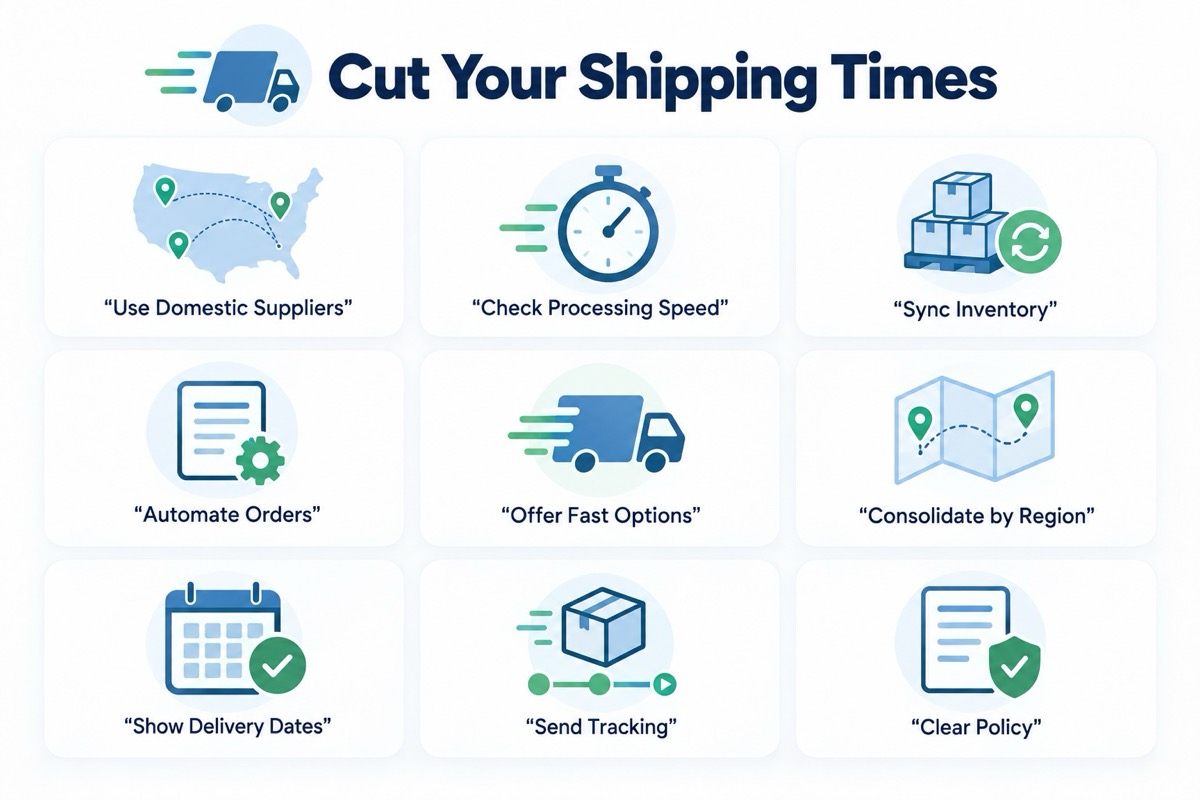
Learning how to reduce dropshipping shipping times comes down to one core principle: shorten the distance and the steps between your supplier and your customer. Domestic suppliers, automated fulfillment, and honest communication do the heavy lifting.
Start with the biggest lever first. Switch to US or Canadian suppliers so your packages travel days instead of weeks. Then tighten your own workflow with automation and real-time inventory syncing. Finally, manage expectations with accurate estimates, proactive tracking, and a clear shipping policy.
Fast shipping is no longer optional in a market where customers expect three-day delivery. But it is also a huge opportunity, because most competitors still ship slowly. Get this right and you turn a common pain point into your strongest competitive edge. Cut the wait, keep the customer, and build a store people actually come back to.

.jpg)


