


icking where to build your store feels like a huge decision when you are just starting out, and honestly, it kind of is. The platform you choose shapes how fast you launch, how much you pay, and how smooth the whole experience feels. If you choose something clunky, you can waste weeks fighting your tools instead of selling. That is why finding the easiest platform to start dropshipping matters so much for beginners.
The good news is that in 2026 you have more beginner-friendly options than ever. Most modern platforms handle the heavy lifting, so you do not need to code or hire anyone. This guide ranks seven of the best choices and breaks down what makes each one easy or not. By the end, you will know exactly which option fits your goals, your budget, and your comfort level.
What Makes a Dropshipping Platform Easy?
Before the rankings, it helps to define what "easy" actually means. Not every platform is beginner-friendly in the same way, and the right fit depends on what matters most to you.
The Key Factors for Beginners
A few things separate a smooth launch from a frustrating one. Keep these in mind as you compare options:
- Setup speed, meaning how quickly you can go from signup to a live store
- Learning curve, or how intuitive the dashboard and tools feel
- App ecosystem, since supplier apps connect your products automatically
- Cost, including monthly fees and transaction charges
- Support quality, because fast help matters when you are stuck
The easiest platform to start dropshipping balances all of these. A cheap platform with no support is not truly easy, and neither is a powerful one with a steep learning curve.
Why Supplier Integration Matters Most
Here is the factor beginners overlook. The platform itself is only half the equation. The real magic happens when your platform connects smoothly to reliable suppliers through an app. That integration is what turns a website into an actual dropshipping store.
A platform with weak supplier integrations will slow you down no matter how pretty it looks. So as you read these rankings, pay attention to how well each option plays with quality supplier apps.
The 7 Easiest Platforms to Start Dropshipping in 2026
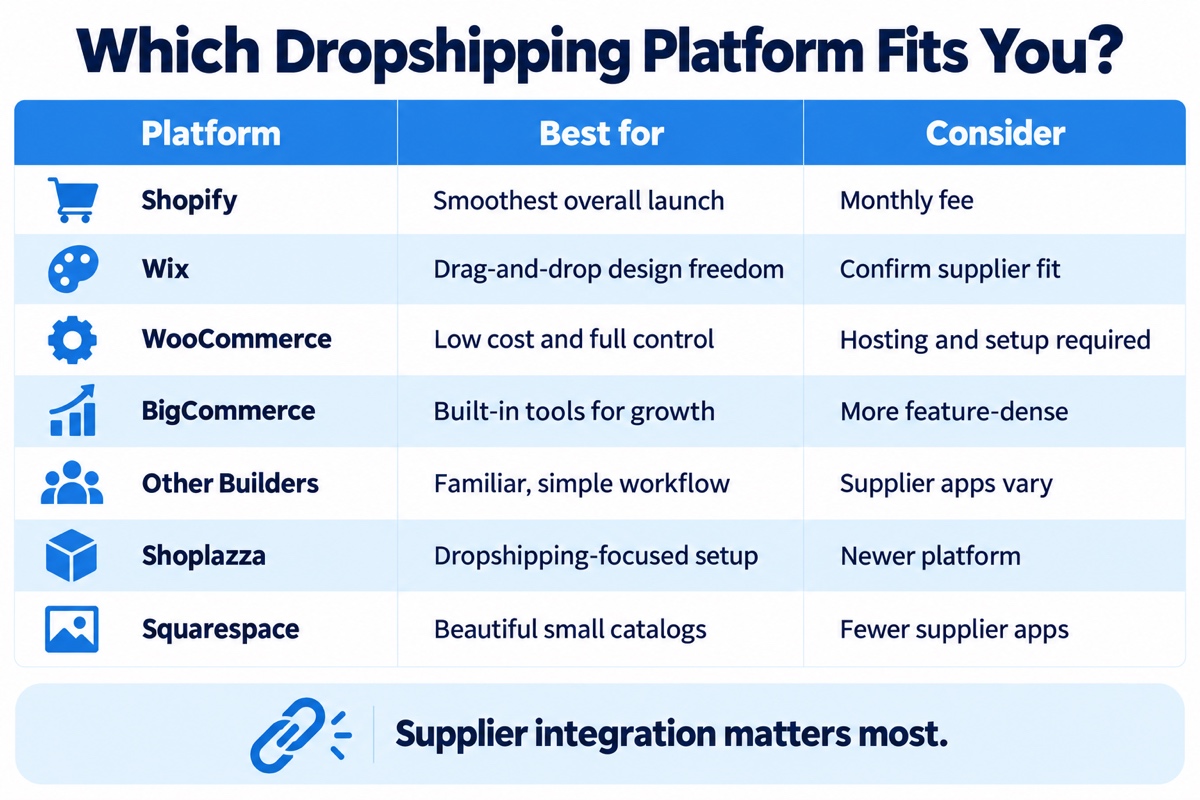
Here are the top picks, ranked with beginners in mind. We weighed setup speed, ease of use, supplier integrations, cost, and support to find the best fit for most new store owners. For context, ecommerce platform usage data from BuiltWith consistently shows these names leading the market, which also means more tutorials and support when you get stuck.
1. Shopify
Shopify is the gold standard for beginner dropshippers, and for good reason. It is purpose-built for ecommerce, which means almost everything you need is baked in or a click away. You can launch a professional store in an afternoon without touching code.
The dashboard is clean and guided, so you always know what to do next. Its app store is massive, and crucially, it integrates seamlessly with top supplier apps, making product sourcing effortless.
Why it is easy: Intuitive setup, guided onboarding, and the deepest ecommerce app ecosystem anywhere.
Best for: Beginners who want the smoothest path and do not mind a monthly fee. If you are weighing it against other builders, our comparison of Shopify vs WooCommerce for dropshipping is a helpful read.
2. Wix
Wix started as a general website builder, but its ecommerce tools have grown fast. For beginners who value creative freedom, Wix is one of the easiest platforms to start dropshipping. Its drag-and-drop editor makes design genuinely fun and forgiving.
You can build a visually distinctive store without any technical skill. Wix also connects to dropshipping apps, so you can source products and automate orders without hassle.
Why it is easy: True drag-and-drop design and an approachable all-in-one dashboard.
Best for: Visual thinkers who want design flexibility. If you are torn between the two biggest beginner builders, our comparison of Shopify vs Wix breaks down the differences.
3. WooCommerce
WooCommerce is a free plugin that turns a WordPress site into an online store. It is incredibly flexible and has no monthly platform fee, which makes it attractive for budget-conscious beginners who are willing to learn a little.
The tradeoff is a slightly steeper setup. You manage your own hosting and handle a few more moving parts. Once configured, though, it is powerful and endlessly customizable.
Why it is easy: Free to start and deeply flexible once set up.
Best for: Beginners comfortable with WordPress who want control and low ongoing costs.
4. BigCommerce
BigCommerce is a robust, scalable platform with strong built-in features. Many tools that require apps elsewhere come standard here, which can simplify your setup. It handles growth well, so you will not outgrow it quickly.
The interface is a touch more feature-dense than Shopify, so there is a mild learning curve. For beginners who plan to scale fast, that tradeoff can be worth it.
Why it is easy: Lots of built-in features mean fewer apps to juggle.
Best for: Beginners thinking ahead to serious growth from day one.
5. Wix Alternatives and Website Builders
Several other all-in-one builders offer beginner-friendly dropshipping, including options you might already know from building simple websites. These platforms prioritize ease and design, though their supplier app ecosystems vary.
They can be a comfortable starting point if you already use one of them. Just confirm that your chosen platform integrates with a reliable supplier app before committing.
Why it is easy: Familiar, approachable builders with gentle learning curves.
Best for: Beginners who already use a website builder and want to add a store. Our roundup of the best Shopify alternatives covers several in detail.
6. Shoplazza
Shoplazza is a newer ecommerce platform built specifically with dropshippers in mind. It offers a clean interface and features tailored to online selling, and it faces far less crowded competition than the big names.
Because it is purpose-built for ecommerce, much of the complexity is handled for you. It is an easy, modern option worth considering, especially if you want to stand out from the Shopify crowd.
Why it is easy: Purpose-built for ecommerce with a streamlined, modern dashboard.
Best for: Beginners wanting a fresh, dropshipping-focused platform.
7. Squarespace
Squarespace is beloved for beautiful templates and simple editing. Its commerce features are solid for small stores, and the design-first approach makes it easy to create a polished storefront quickly.
Its supplier app selection is narrower than Shopify's, so check integration options first. For a visually driven beginner with a small catalog, though, it is a pleasant and easy place to start.
Why it is easy: Gorgeous templates and a famously simple editor.
Best for: Design-focused beginners with a small, curated catalog.
How to Choose the Easiest Platform to Start Dropshipping for You
Seven solid options is great, but you still need to pick one. The best choice depends on your priorities, so let us make the decision simple.
Match the Platform to Your Priorities
Think about what matters most to you. If you want the smoothest overall experience and the best supplier integrations, Shopify is the safe bet. If design freedom excites you, Wix or Squarespace shine. If low cost is king and you do not mind learning, WooCommerce wins.
There is no single right answer for everyone. The easiest platform to start dropshipping for you is the one that fits how you like to work and what you plan to sell.
Do Not Overthink the First Choice
Here is a freeing truth. You can switch platforms later if you need to. Many successful store owners started on one platform and migrated as they grew. Do not let analysis paralysis stop you from launching.
Pick a strong, beginner-friendly option, get your store live, and start learning from real customers. Momentum matters more than a perfect first pick.
Why Your Supplier Matters More Than Your Platform

Here is the part most beginner guides skip. The platform gets all the attention, but your supplier is what actually determines whether your store succeeds. A beautiful store on the easiest platform still fails if shipping is slow and products are poor.
The Hidden Make-or-Break Factor
Your customers never see your platform. They see your products and how fast they arrive. In 2026, shoppers expect quick delivery, and slow overseas shipping generates refunds and bad reviews no matter how polished your store looks.
This is why serious store owners source from vetted North American suppliers. Fast, reliable fulfillment is what turns first-time buyers into repeat customers, and that is the real engine of profit.
DropCommerce: The Easy Supplier Foundation

DropCommerce is the leading supplier platform for dropshippers who want to launch easily and compete on quality. It connects you exclusively with pre-vetted US and Canadian suppliers, and it integrates seamlessly with the easiest platforms on this list.
- Two to five day shipping from US and Canadian warehouses
- Pre-vetted suppliers with consistent quality standards
- No minimum order requirements
- Seamless Shopify and WooCommerce integration
- Real-time inventory syncing to prevent overselling
- A curated catalog across home, beauty, pet, and lifestyle niches
DropCommerce works particularly well for beginners who want to win on customer experience rather than racing to the bottom on price. Pair it with any easy platform above and you have both halves of a store built to last.
Common Beginner Mistakes When Choosing a Platform
A few predictable missteps trip up new store owners at this stage. Sidestep them and you will save real time and money.
Chasing the Cheapest Option Only
Price matters, but the cheapest platform is not always the easiest. A free tool with no support or weak integrations can cost you far more in wasted time. Weigh the full picture, not just the monthly fee.
Factor in ease of use, support, and supplier compatibility. Sometimes a small monthly fee pays for itself in hours saved.
Ignoring Supplier Integration
Beginners often fall in love with a platform's design and forget to check whether it connects to a quality supplier app. That oversight can leave you stuck. Always confirm strong supplier integration before you commit.
The platform and the supplier work as a team. Choosing one without checking the other is a recipe for frustration.
Delaying Launch for Too Long
The biggest mistake is not choosing a platform at all. Endless research feels productive, but it keeps you from the only thing that teaches you anything, which is selling. Pick a solid option and launch.
You learn more from your first real customer than from a month of comparisons. Get live, then improve.
How to Set Up Your Store Once You Pick a Platform

Choosing a platform is step one. Getting your store live is the part that actually makes you a store owner. Here is the simple sequence that works on almost any easy platform.
The Basic Launch Sequence
No matter which platform you choose, the setup follows a similar rhythm. Work through these stages and you will have a functioning store faster than you expect:
- Sign up and choose a clean, professional theme
- Connect a reliable supplier app to import products
- Add your products with clear photos and honest descriptions
- Set up payments, shipping settings, and store policies
- Preview everything, then publish and share your store
Most modern platforms guide you through this with built-in checklists. You do not need to memorize anything, just follow the prompts and fill in each piece.
Getting Your First Products In
The product import step is where your supplier integration earns its keep. With a good supplier app, you can add products to your store in a few clicks, complete with images and pricing. This is the moment your empty website becomes a real shop.
Start with a focused selection rather than hundreds of random items. A tight, coherent catalog converts better and is far easier to manage while you learn the ropes.
Launching Without Perfectionism
Your first version will not be perfect, and that is completely fine. A live store you can improve beats a flawless store that never ships. Get the essentials in place, publish, and refine based on what real visitors do.
Perfectionism is the enemy of progress here. The sooner you launch, the sooner you learn what your customers actually want. You can always polish your theme, rewrite descriptions, and add products once sales start rolling in, and those improvements are far more effective when guided by real buyer behavior than by guesswork before launch.
Frequently Asked Questions
A few questions come up constantly from beginners weighing their options. Here are quick, honest answers.
What Is the Cheapest Easy Platform?
WooCommerce is the cheapest to start because the core plugin is free, though you pay for hosting and may add paid extensions. Among the hosted builders, pricing is competitive and often includes everything you need in one monthly fee. Remember that the cheapest option is not automatically the easiest, so weigh cost against support and integrations.
Can I Really Launch Without Any Tech Skills?
Yes. Modern platforms are built for people with zero coding experience. Drag-and-drop editors, guided setup, and supplier apps handle the technical work for you. If you can use social media and send an email, you can build a dropshipping store on any of these platforms.
Do I Need Shopify Specifically?
No, though Shopify is the most popular choice for good reasons. Plenty of thriving stores run on Wix, WooCommerce, BigCommerce, and others. The best platform is the one that fits how you like to work and connects to a quality supplier. Shopify is a safe default, not a requirement.
Can I Switch Platforms Later?
Absolutely. Many store owners start on one platform and migrate as they grow or as their needs change. It takes some effort, but it is common and manageable. Do not let the fear of a wrong first choice keep you from launching today.
Final Thoughts on the Easiest Platform to Start Dropshipping
Finding the easiest platform to start dropshipping does not have to be complicated. Shopify leads for most beginners thanks to its smooth setup and unmatched app ecosystem, but Wix, WooCommerce, BigCommerce, Shoplazza, and Squarespace all offer genuinely beginner-friendly paths depending on your priorities.
The deeper lesson is that your platform is only half the story. The suppliers behind your products decide whether customers come back. Choose an easy platform you enjoy using, then pair it with fast, reliable suppliers, and you have a store built to grow.
If you are ready to launch on a foundation of vetted suppliers and quick North American shipping, try DropCommerce and connect it to whichever easy platform fits you best.

.jpg)


