


our store is live. The products are loaded, the theme looks clean, and you've refreshed your dashboard roughly four hundred times today. And still, that order count sits at a stubborn zero. If that's you right now, take a breath. Learning how to get first dropshipping sale is the hardest and most important milestone in the entire journey, and almost every successful store owner started exactly where you are.
Here's the encouraging part. That first sale rarely comes from luck. It comes from a predictable sequence of fixes: getting real traffic, building enough trust, pricing correctly, and removing the small frictions that quietly kill conversions. Once you understand that sequence, the zero stops feeling permanent.
In this guide, we'll walk through nine proven steps for how to get first dropshipping sale, why most beginners stall before it, and exactly what to do this week to break through.
Why Learning How to Get First Dropshipping Sale Feels So Hard

Before the tactics, it helps to understand why that opening sale is such a wall. The honest answer is that a brand new store has no traffic, no reputation, and no data. You're asking a stranger to trust an unknown store with their credit card, and you're doing it without reviews, social proof, or a track record.
That's a lot to overcome, but every one of those gaps is fixable. The first sale is less about finding a magic product and more about closing the trust and traffic gap that every new store faces.
The expectation problem
Many beginners quietly expect sales within days of launching. When that doesn't happen, they assume the business is broken. Realistic timelines tell a different story: 2 to 6 weeks to a first sale with paid ads, and 3 to 6 months for organic traffic to mature. The store isn't broken. The clock just hasn't run yet.
Zero traffic equals zero sales
This sounds obvious, but it's the number one reason stores never make a sale. Plenty of beginners build a beautiful store and then simply wait, as if Google will deliver shoppers automatically. It won't. No traffic means no sales, period, and most of the work of getting that first order is really the work of getting your first real visitors.
Step 1: Make Sure Your Store Is Actually Trustworthy
Before you spend a dollar on traffic, audit your store through a stranger's eyes. Traffic sent to a store that looks sketchy just wastes money.
Check the essentials. Do you have a clear, professional logo? A readable About page that tells your story? Visible contact information, shipping details, and a return policy? These trust signals feel minor to you, but to a first-time visitor they're the difference between buying and bouncing.
Also confirm the basics work: every product page loads, the add-to-cart button functions, and checkout completes without errors. It's heartbreaking how many "I can't get a sale" problems turn out to be a broken checkout. Place a test order yourself before driving any traffic.
Step 2: Pick One Traffic Source and Commit
The fastest path to that first order is choosing a single traffic channel and going deep, instead of dabbling in five at once.
Your main options break down like this:
- Paid ads (Facebook, Instagram, TikTok) deliver fast traffic and fast data, but cost money and require testing discipline
- Organic social (TikTok, Reels, Pinterest) is free but slower, rewarding consistency and creativity
- SEO and content build durable, compounding traffic over months, ideal for the long game
There's no single right answer, but there is a wrong one: spreading yourself thin across all of them. Pick the channel that fits your budget and skills, then commit to learning it properly before adding another.
If you have a budget
Paid ads are the most reliable way to force traffic quickly, which makes them the most common route to a first sale. Even a modest daily budget, tested patiently, will surface what's working faster than organic methods.
If you have more time than money
Organic content can absolutely produce your first sale without ad spend. A single TikTok dropshipping video that resonates can send a wave of buyers to a brand new store. The tradeoff is that it's less predictable and rewards volume and persistence.
Step 3: Target the Right Audience, Not Everyone
A common reason beginners struggle to land that opening order is targeting too broadly. "Everyone who likes cool products" is not an audience. It's a recipe for wasted spend.
Get specific. Who exactly is your product for? A new mom? A home barista? A dog owner who travels? The narrower your audience, the sharper your ads and content can be, and the higher your odds of clicking with someone ready to buy.
This is where niche focus pays off directly. Stores built around a clear dropshipping niche have a built-in audience to target, while general stores struggle to speak to anyone in particular. If you're selling to "everyone," you're effectively selling to no one.
Step 4: Lead With Your Best Single Product

When you're hunting for that first sale, don't promote your entire catalog at once. Pick one strong hero product and put all your energy behind it.
Why one? Because a single product lets you craft a focused offer, a specific audience, and a clear message. Spreading attention across twenty products dilutes everything. Your hero product should solve a real problem, have a clear "wow" factor, and ideally not be available in every big-box store down the street.
Once that one product earns its first sales and proves your funnel works, you can expand. But the first sale almost always comes from concentration, not variety.
Step 5: Nail Your Pricing and Offer
Pricing scares beginners, who often set prices too low out of fear, then can't afford ads or profit. Others price randomly with no logic at all. Both hurt your odds.
Price for healthy margins while staying competitive. Most successful stores aim for dropshipping profit margins that leave room for advertising costs, because if there's no margin, there's no budget to acquire customers. A product that "sells" but loses money on ads isn't a win.
Sweeten the offer
Beyond the raw price, the offer matters. Free shipping (baked into your price), a small launch discount, or a simple bundle can be the nudge that converts a hesitant first-time buyer. People don't just buy products. They buy deals that feel too good to pass up.
Step 6: Build Trust With Social Proof
The chicken-and-egg problem of the first sale is that buyers trust stores with reviews, but you can't get reviews without sales. You have to manufacture trust in other ways at first.
Add trust badges at checkout, display clear guarantees, and show your products in real-life context with quality photos or video. If you have any user-generated content, even from the supplier or early testers, use it. A store that looks established and credible converts strangers far better than a bare-bones one.
You can also seed early credibility by sharing your product with friends, family, or a small online community for honest feedback. Even a couple of genuine testimonials soften the "nobody has bought this yet" feeling that scares off first buyers.
A consistent, active social media presence helps here too. When a hesitant shopper clicks through to your Instagram or TikTok and finds a real account posting regularly, the store instantly feels more legitimate than one with no footprint at all. You don't need a huge following. You need to look like a real business that a real person stands behind. Even a handful of posts showing the product in use, answering common questions, or sharing your story can tip a first-time visitor from "maybe" to "yes."
Step 7: Remove Every Point of Friction
Sometimes the traffic is fine and the product is good, but the checkout leaks buyers. Every extra step, surprise cost, or confusing moment costs you sales.
According to research from the Baymard Institute, the average cart abandonment rate hovers around 70%, and the top causes are extra costs revealed late, forced account creation, and a checkout that's too long or complicated.
Fix these directly. Show shipping costs early, offer guest checkout, and strip the checkout down to the fewest possible steps. Offer the payment methods people actually use, including options like Apple Pay and buy-now-pay-later. Each bit of friction you remove nudges your conversion rate, and a hesitant first buyer up.
Step 8: Capture the Visitors Who Don't Buy Yet
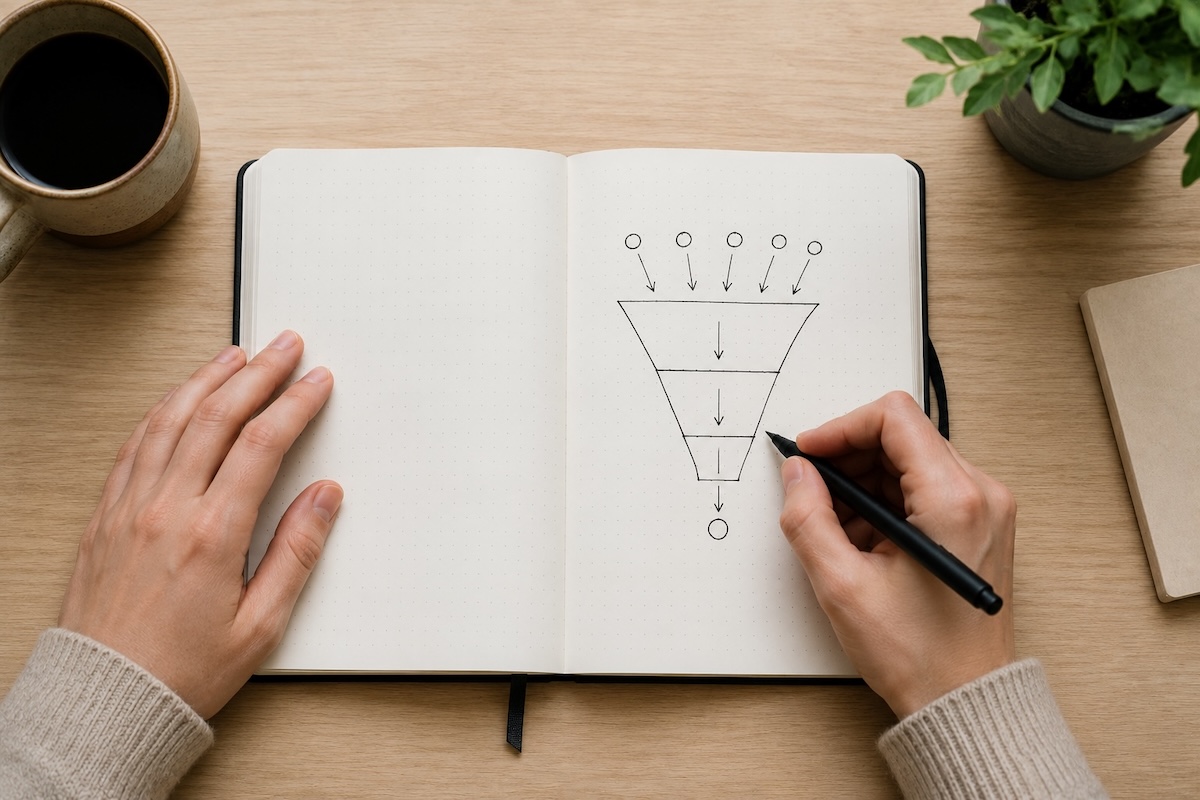
Most first-time visitors won't buy on their first visit, and that's normal. The mistake is letting them leave forever. Capturing them gives you a second, third, and fourth chance to win that first sale.
Add an email capture popup with a small incentive, like 10% off, to build a list from day one. Email marketing remains one of the highest-return channels in ecommerce, and a recovered abandoned-cart email is a classic source of a store's very first order.
If you're running paid ads, set up retargeting so people who viewed your product see it again. Familiarity builds trust, and many first sales come on a shopper's second or third encounter with your store, not the first.
Think about your own buying habits. You rarely purchase from a brand the very first time you see it. You notice it, maybe click, leave, then see it again a few days later and finally buy. Your customers behave the same way. Retargeting and email simply make sure that second and third encounter actually happens instead of the visitor forgetting you forever. For a brand new store with no name recognition, these follow-up touches often do more to produce that first sale than the initial visit ever could.
Step 9: Be Patient, Then Analyze and Adjust

Here's the step most beginners skip. They run a little traffic, see no sale, panic, and change everything at once, which destroys the data they need to learn.
Instead, give each test enough time and traffic to mean something. A handful of clicks tells you nothing. A few hundred visitors with no sale, though, points to a specific problem you can diagnose.
Read the signals
Use your data to find the leak. If people click your ad but never add to cart, your product page or price is the issue. If they add to cart but don't check out, the problem is checkout friction or shipping cost. If nobody clicks your ad at all, your offer or targeting needs work. Each symptom has a fix, and learning to read these signals is the real skill behind how to get first dropshipping sale.
Common Mistakes That Delay the First Sale
Sometimes the fastest way forward is to stop doing the things holding you back. These are the errors that keep beginners stuck at zero longest.
Giving up after a few days
The most common mistake is quitting too soon. A store that's two weeks old with a tiny bit of traffic simply hasn't had a fair chance yet. Many would-be successful stores get abandoned days before they would have made their first sale. Patience isn't passive here. It's a strategy.
Endlessly tweaking the store instead of driving traffic
It feels productive to keep adjusting your logo, colors, and fonts. It isn't. A polished store with no visitors makes exactly zero sales. Once your store clears the basic trust check, your energy belongs on traffic and offer, not on a fifth shade of blue for your buy button.
Competing only on price
New store owners often assume the lowest price wins. It rarely does, and it destroys the margin you need for ads. Customers buy because of trust, a compelling offer, and a product that solves their problem, not because you shaved fifty cents off a competitor. Racing to the bottom is a race with no winner.
Ignoring the numbers
Selling without watching your metrics is guessing. If you don't know your click-through rate, add-to-cart rate, and checkout completion rate, you can't tell which part of your funnel is broken. The data is right there in your dashboard, and it's the map to your first sale.
How Long Should the First Sale Take?
Setting the right expectation prevents the panic-quitting that ends most stores. So how long is normal?
With paid ads and a reasonable testing budget, many stores see a first sale within two to six weeks, sometimes faster if the product and offer click early. The ads do the heavy lifting of forcing traffic, so the timeline compresses.
With purely organic methods, the range stretches to three to six months as your content library and audience grow. The payoff is cheaper, more durable traffic, but it asks for more patience up front.
If you've passed these windows with real, consistent effort and still no sale, that's not a sign to quit. It's a signal that a specific part of your funnel needs diagnosing, whether that's your targeting, your offer, your product page, or your checkout. The store that treats a slow start as information, rather than as a verdict, is the one that eventually breaks through.
What to Do This Week
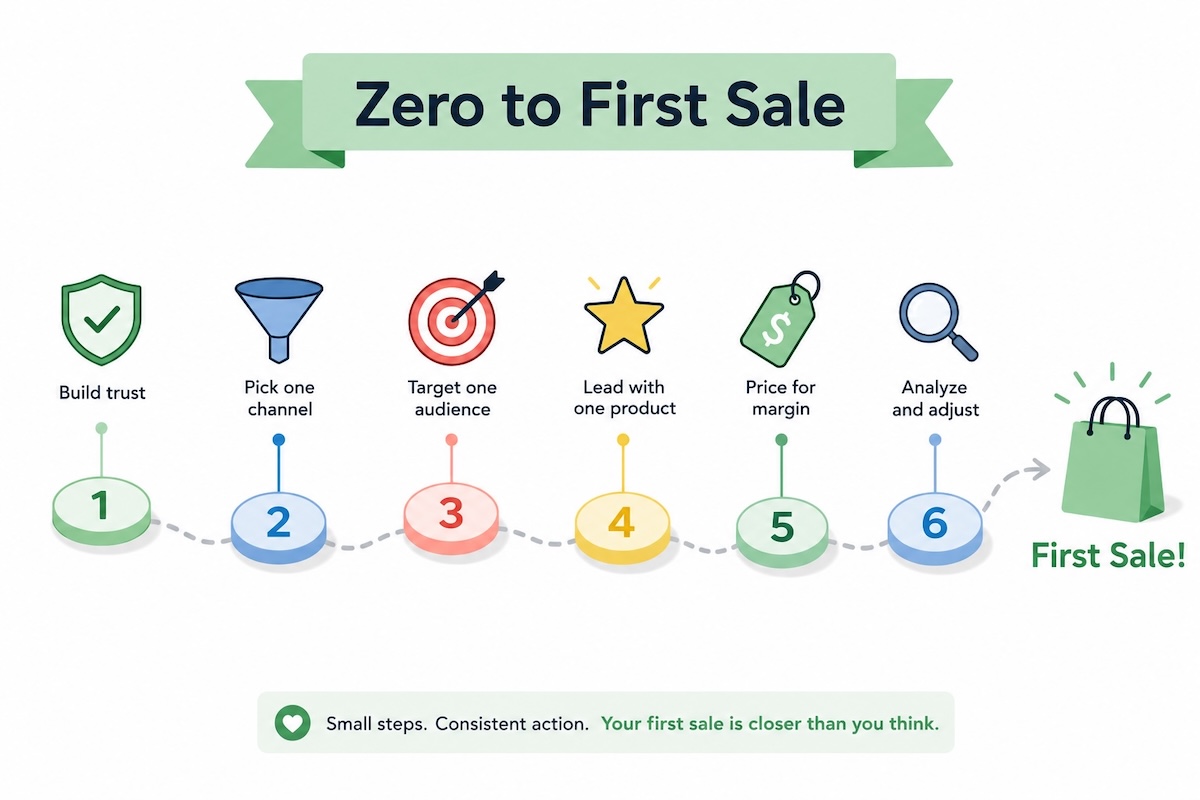
Let's make this concrete. If you want to break the zero this week, here's a simple sequence.
First, place a test order on your own store and fix anything broken. Second, choose your one hero product and your one traffic channel. Third, write a specific offer for a specific audience. Fourth, drive your first real traffic, whether that's a small ad budget or a few pieces of organic content. Fifth, set up an email popup and basic retargeting so no visitor is wasted. Then watch your data, stay patient, and adjust based on where buyers drop off.
None of these steps are complicated. The magic is in actually doing them in order instead of waiting and hoping.
Final Thoughts: The First Sale Changes Everything
That first order does something no tutorial can. It proves your store works, that strangers will pay you, and that this whole thing is real. Suddenly the abstract becomes concrete, and the second sale feels a hundred times more achievable than the first.
Learning how to get first dropshipping sale comes down to a simple truth: you need real traffic, a trustworthy store, a focused offer, and the patience to read your data and fix what's leaking. Do that, and the zero becomes a one. And once you've made one sale, you've stopped wondering whether dropshipping works and started learning how to make it work better.
Your first buyer is out there right now. Go give them a reason, and a clear path, to click buy.

.jpg)


