


liExpress dominated the dropshipping world for years. Low prices, massive product catalogs, and easy integration made it the default choice for new store owners. But if you've been paying attention lately, you've noticed the cracks in that foundation getting wider.
Shipping times that stretch into weeks. Product quality that varies wildly from one order to the next. Customers who demand refunds before their packages even arrive. Sound familiar?
Dropshipping without AliExpress isn't just possible in 2026. For many store owners, it's become essential. The expectations of online shoppers have shifted dramatically, and the old playbook no longer delivers results.
In this guide, we'll explore why so many successful dropshippers are moving away from AliExpress, what alternatives actually work, and how to make the transition without disrupting your business.
Why Dropshippers Are Moving Away from AliExpress
Before diving into alternatives, it helps to understand what's driving this shift. The problems with AliExpress dropshipping have compounded over time, creating real challenges for store owners who want to build sustainable businesses.
Shipping Times Have Become Unacceptable
The biggest issue remains delivery speed. According to Statista, 61% of online shoppers now expect delivery within three days. Meanwhile, most AliExpress orders take two to six weeks to arrive.
That gap creates serious problems. Customers who wait three weeks for a package often forget what they ordered. By the time it arrives, buyer's remorse has set in. They're more likely to request refunds, leave negative reviews, or file chargebacks.
The math simply doesn't work anymore. When a significant percentage of your orders result in complaints or returns, your profit margins evaporate regardless of how cheap your products were to source.
Quality Control Is Nearly Impossible
With thousands of different sellers on AliExpress, product quality varies enormously. The same product listing might ship from multiple suppliers with different manufacturing standards. One customer receives exactly what they expected. The next receives something that looks nothing like the photos.
You have almost no control over this process. You can't inspect products before they ship. You can't establish quality standards with anonymous suppliers. You're essentially gambling with every order, hoping this one meets your customer's expectations.
Customer Expectations Have Changed
Amazon trained an entire generation of shoppers to expect fast, free shipping with hassle-free returns. These same customers now shop at your store with identical expectations.
When you can't meet those expectations, you're fighting an uphill battle. Every sale requires extra explanation about shipping times. Every support ticket takes longer to resolve. Every customer interaction becomes harder than it needs to be.
This is exactly why learning how to scale your dropshipping business often means reconsidering your supplier strategy from the ground up.
The Benefits of Dropshipping Without AliExpress
Moving away from AliExpress opens up advantages that directly impact your bottom line and customer satisfaction.
Faster Shipping Builds Customer Trust

Domestic and regional suppliers typically deliver within two to five business days. That's a completely different customer experience than waiting a month for a package.
Fast shipping does more than reduce complaints. It builds trust. Customers who receive orders quickly are more likely to become repeat buyers. They're more likely to recommend your store to friends. They're more likely to leave positive reviews.
The lifetime value of a customer who trusts your store far exceeds any savings you might capture from cheaper overseas products.
Better Product Quality Means Fewer Returns
Working with established suppliers in North America or Europe typically means more consistent product quality. These suppliers have reputations to protect. They maintain quality standards because their business depends on it.
When products consistently match their descriptions and photos, your return rate drops significantly. Lower returns mean higher profits, less customer service work, and better reviews.
Understanding your dropshipping profit margins requires accounting for return rates. Even a small improvement in product quality can dramatically change your actual profitability.
Easier Communication with Suppliers
Working with suppliers in your time zone who speak your language makes everything easier. Questions get answered the same day instead of waiting 12 hours for a response. Problems get resolved faster. You can actually build relationships rather than just placing orders.
Good supplier relationships become competitive advantages over time. Reliable suppliers might offer you better pricing, exclusive products, or priority fulfillment during busy seasons.
Reduced Legal and Customs Complications
International shipping introduces variables you can't control. Packages get held at customs. Import duties add unexpected costs. Certain products face restrictions or regulations when crossing borders.
Domestic dropshipping eliminates these headaches. No customs forms. No duty calculations. No packages stuck in international transit limbo for weeks at a time.
10 Proven Alternatives to AliExpress for Dropshipping
Now let's explore the platforms and approaches that actually work when you're ready to move beyond AliExpress.
1. DropCommerce
.jpg)
DropCommerce is the leading platform for dropshipping without AliExpress, connecting store owners exclusively with US and Canadian suppliers. If you're serious about fast shipping and quality products, this is where to start.
What makes DropCommerce stand out:
- Two to five day shipping from US and Canadian warehouses
- Pre-vetted suppliers with consistent quality standards
- No minimum order requirements
- Seamless Shopify and WooCommerce integration
- Real-time inventory syncing to prevent overselling
- Curated product catalog across home, beauty, pet, and lifestyle niches
- Dedicated North American support team
DropCommerce works particularly well for store owners who want to compete on customer experience rather than racing to the bottom on price. The platform handles supplier vetting, so you can focus on marketing and growing your store instead of chasing unreliable partners.
The per-unit costs run higher than AliExpress, but improved customer satisfaction, fewer returns, and better reviews typically translate to higher overall profitability.
2. Print on Demand Services (Printful, Printify, Gooten)
Print on demand (POD) represents a form of dropshipping without AliExpress that many entrepreneurs overlook. Instead of sourcing pre-made products, you create custom designs that get printed when customers order.
Popular POD services like Printful, Printify, and Gooten operate production facilities across North America and Europe. Shipping times typically range from three to seven business days for domestic orders.
POD works well for:
- Custom apparel and accessories
- Home decor items like wall art and pillows
- Personalized gifts
- Niche products for specific communities or interests
The comparison between models is worth understanding. Check out our breakdown of print on demand vs dropshipping to see which approach fits your business.
3. Wholesale Dropshipping Suppliers
Many traditional wholesale suppliers now offer dropshipping options. These are established businesses with warehouses full of inventory, not individual sellers listing products from their apartments.
Finding wholesale dropshipping partners takes more effort than browsing AliExpress. You may need to apply for accounts, meet minimum order requirements initially, or negotiate terms. But the relationship tends to be more stable and professional.
Look for wholesale suppliers who:
- Maintain US or Canadian warehouse locations
- Offer blind shipping (no branding visible to customers)
- Provide real-time inventory feeds
- Have established track records in their categories
4. Spocket (US and EU Suppliers)
Spocket focuses specifically on dropshipping without AliExpress, connecting store owners with suppliers primarily from the US and Europe. The platform integrates directly with Shopify and WooCommerce.
Key features include:
- Curated supplier network with quality standards
- Most products ship within two to five days
- Branded invoicing options
- One-click product import to your store
Spocket works well for store owners who want an AliExpress-like browsing experience but with domestic suppliers.
5. Modalyst (Independent Brands)
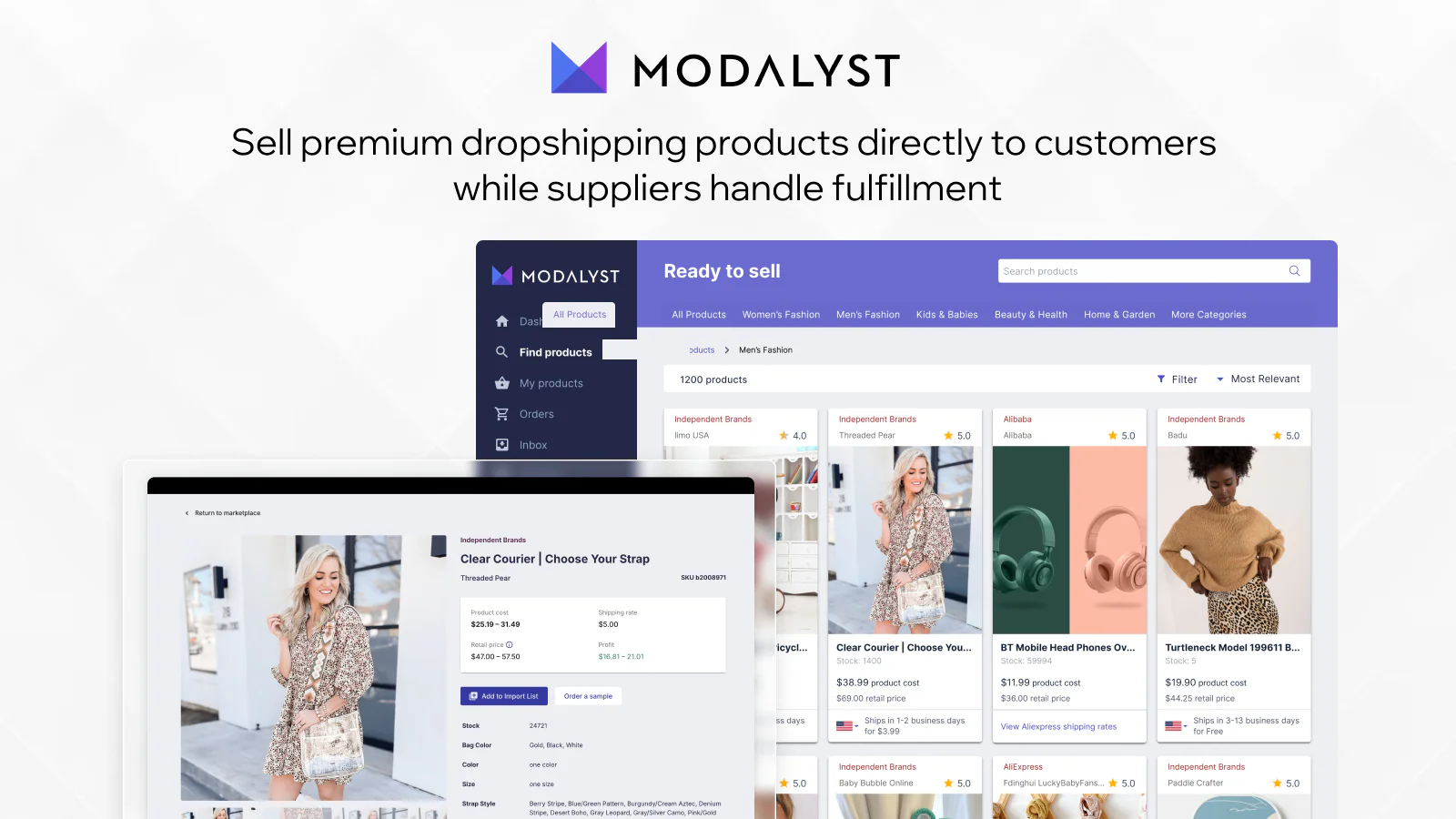
Modalyst offers access to independent brands and premium products you won't find on AliExpress. The platform emphasizes unique, higher-quality items rather than commodity products.
The supplier network includes:
- US-based independent brands
- European fashion and lifestyle products
- Premium pricing tiers with better margins
- Integration with major ecommerce platforms
If you're building a store around quality and uniqueness rather than lowest prices, Modalyst provides relevant options.
6. SaleHoo (Supplier Directory)
SaleHoo operates as a supplier directory and dropshipping platform combined. Their team verifies suppliers before listing them, reducing the risk of working with unreliable partners.
The platform includes:
- Over 8,000 verified suppliers
- Market research tools for finding profitable products
- Training resources for new dropshippers
- Both wholesale and dropshipping options
SaleHoo requires a membership fee but can save significant time compared to finding and vetting suppliers independently.
7. Doba (Aggregated Catalog)
Doba aggregates products from multiple suppliers into a single catalog, simplifying the product sourcing process. The platform handles supplier relationships and order routing behind the scenes.
Features include:
- Large product catalog across multiple categories
- Automated order processing
- Inventory sync to prevent overselling
- Consolidated billing across suppliers
This approach works well if you want variety without managing relationships with dozens of different suppliers.
8. CJDropshipping (US Warehouse Option)
CJDropshipping bridges the gap between AliExpress-style product variety and faster shipping through their US warehouse network. While products still originate from China, items stored in US warehouses ship within two to five days.
Key features:
- US warehouse options for popular products
- Product sourcing service for custom items
- Quality inspection before shipping
- No minimum order requirements
- Print-on-demand capabilities
This option works for store owners who want access to Chinese manufacturing prices but need faster delivery for their best sellers.
9. Brand Partnerships and Direct Sourcing

For established store owners, reaching out directly to brands can unlock opportunities unavailable through platforms. Many smaller brands and manufacturers welcome retail partnerships, especially with stores that fit their target market.
Direct sourcing requires more effort:
- Identifying brands that align with your niche
- Reaching out professionally with partnership proposals
- Negotiating terms and setting up accounts
- Managing relationships ongoing
The payoff includes exclusive products, better pricing, and stronger supplier relationships. This approach becomes more viable as your store grows and your track record develops.
10. Local and Regional Artisans
Depending on your niche, working with local makers and artisans can differentiate your store dramatically. Handmade goods, locally produced items, and craft products appeal to customers who value authenticity.
This approach requires:
- Finding makers in your region or niche
- Establishing dropshipping arrangements (many small producers aren't set up for this)
- Potentially helping with logistics and fulfillment
The unique products and stories you can tell create marketing advantages that commodity products simply can't match.
How to Transition from AliExpress to Better Suppliers
Making the switch doesn't have to be abrupt. A gradual transition protects your business while you establish new supplier relationships.
Start with Your Best Sellers
Identify your top-performing products and find domestic alternatives for those first. These products generate most of your revenue, so improving them has the biggest impact on customer satisfaction.
When evaluating alternatives, consider:
- Product quality (order samples before listing)
- Shipping speed and reliability
- Per-unit costs including shipping
- Supplier communication and responsiveness
Run Both Options Simultaneously
During transition, you might keep AliExpress products available while adding domestic alternatives. This lets you compare customer feedback, return rates, and actual profitability side by side.
Some store owners offer expedited shipping options that source from domestic suppliers while keeping slower, cheaper options from overseas. Customers who value speed pay a premium. Those who don't mind waiting save money.
Adjust Your Pricing Strategy
Domestic products typically cost more per unit than AliExpress alternatives. You'll need to adjust pricing accordingly.
The good news: customers often happily pay more for faster shipping and better quality. Your marketing should emphasize these benefits. Use language like "ships from the USA" or "arrives in 3-5 business days" prominently.
Understanding product pricing strategies becomes even more important when your cost structure changes.
Update Your Marketing Messaging

Once you've transitioned to domestic suppliers, tell customers about it. Fast shipping becomes a selling point. American-made or Canadian-sourced products appeal to many shoppers.
Update your:
- Product descriptions with shipping timeframes
- Homepage with delivery promises
- Ad copy emphasizing speed
- Email campaigns highlighting the improvement
The switch from AliExpress to domestic suppliers isn't just an operational change. It's a marketing opportunity.
Common Concerns About Dropshipping Without AliExpress
Won't My Margins Suffer?
Higher product costs don't automatically mean lower profits. When you account for reduced returns, fewer chargebacks, less customer service time, and higher customer lifetime value, many store owners find their actual margins improve.
Run the real numbers for your store. Calculate your true cost per successful order, including all the hidden costs of dealing with unhappy customers.
How Do I Find Products in My Niche?
Most domestic supplier platforms cover popular dropshipping categories: home goods, fashion, beauty, pet supplies, outdoor products, and more. Less common niches may require more research.
For specialized niches, consider:
- Searching for manufacturers and brands directly
- Attending trade shows (even virtually)
- Using supplier directories filtered by category
- Joining niche communities where suppliers participate
Our guide on how to choose a dropshipping niche covers how to evaluate niches for supplier availability.
What About Product Variety?
AliExpress offers millions of products. Domestic supplier platforms offer far fewer. This is actually a feature, not a bug.
Curated catalogs mean less time sorting through junk. Fewer products per category means each one has been vetted for quality. You spend less time on product research and more time on marketing and customer experience.
Many successful stores thrive with just a few dozen carefully selected products rather than thousands of random listings.
Can I Still Compete on Price?
Probably not on rock-bottom pricing, and that's okay. Competing purely on price is a race to the bottom that nobody wins. Low prices attract bargain hunters who are the first to complain and least likely to become loyal customers.
Better strategy: compete on value. Fast shipping, quality products, and excellent customer service justify higher prices. Customers who care about these things become repeat buyers worth far more than one-time bargain shoppers.
Making the Right Choice for Your Business
Dropshipping without AliExpress isn't the right choice for every store or every product. Some items genuinely only make sense when sourced from overseas manufacturers. Some customers in certain markets prioritize price above all else.
But for most store owners building sustainable businesses in 2026, the math has changed. Customer expectations have risen. The costs of slow shipping and inconsistent quality have increased. The alternatives have improved.
If you're tired of explaining long shipping times, dealing with quality complaints, or watching returns eat your margins, exploring alternatives makes sense. The platforms and approaches outlined here provide real options for building a better business.
Your customers notice the difference when packages arrive quickly. They notice when products match their expectations. They reward stores that deliver on promises with repeat purchases and positive reviews.
The question isn't whether dropshipping without AliExpress works. Thousands of successful stores, like those using Dropcommerce, prove that it does. The question is whether you're ready to make the shift and capture those benefits for your business.
Start with your best sellers. Test domestic alternatives. Measure the results. Let the data guide your transition, and your customers will thank you for it.

.jpg)


